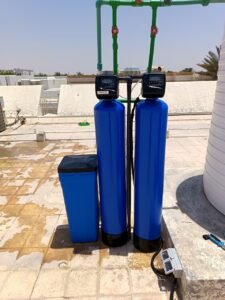
Home Water Filter Installation Guide & Prices in UAE
A complete guide to choosing and installing

These days, installing an underground water tank filter has become an essential part of the entire water supply system of any property, whether it is an industrial facility, a commercial building, residential apartments, or villas and palaces.
This is especially true in regions that endure high temperatures and suffer from water scarcity, or that sit close to factories which contaminate the water supply, all while the quality of the mains connections remains weak.
It is well known that an underground tank is used to cool water or store it for long periods, which means this water is far more exposed to contamination than the water kept in overhead tanks. For that reason, fitting an underground water tank filter is a must, as it becomes our first and main line of defence against every form of sediment, impurity, and calcium build-up.
In this article we will take an in-depth look at how to install an underground water tank filter, why it matters so much, and which filter types are best suited for the job, along with how their maintenance is carried out.
In simple terms, an underground water tank is a system dedicated to storing water below ground level. It may be a large or small tank, a plastic container, or even a pit lined with a barrier that seals it off from the surrounding soil. The most common option, however, is a large-capacity tank buried beneath the ground, where water is collected, stored, and kept cool inside for as long as possible.
These underground tanks are used to store drinking or irrigation water, and they may also be designed to harvest rainwater so it can be put to good use later on.
It is important that underground tanks are built from fully solid, insulating materials so they can withstand every external force acting on them. The most popular types are those made from reinforced steel or polyethylene.
On top of that, the importance of properly sealing an underground tank should never be overlooked, as this prevents any crack or scratch that could later cause water to leak.
As for how an underground tank is positioned and installed, it can be buried completely or partially below ground, mounted in the property’s garden, or perhaps placed in a shed or outbuilding on the premises.
The value of installing an underground water tank filter lies in the fact that the tank sits within an environment that undoubtedly contaminates the water inside it. No matter where the tank is placed, once it is below the roofline it is exposed to external pollutants. This is clearly reflected in the underground tank’s need for more frequent routine cleaning and maintenance than an overhead tank.
If you own a tank buried under the soil or mounted in your garden, you will undoubtedly need an underground water tank filter, which is the ideal solution for removing every form of impurity and sediment suspended in the water.
It is a device fitted at the pipes that either feed the tank or draw water from it, depending on where the contamination occurs. Is the main source that supplies the tank already contaminated, or does the tank hold water stored for a long time that becomes polluted over time with algae, sand, bacteria, and so on?
Based on that answer, we correctly determine where to install the underground water tank filter. There are several types of filters for underground and overhead tanks, and each one differs from the next according to its intended use, the volume of water consumed, how polluted the water is, the individual’s budget, and other factors. Some water filtration methods are simple, easy, and inexpensive, while others demand precision because heavier contamination calls for accurate water treatment using modern technologies and more effective media.
In reality, many people assume that using contaminated water is perfectly normal and causes no harm. Yet once the matter is studied scientifically and carefully, we find that using and drinking dirty water poses serious risks, first to human health and then to the home plumbing and the tank itself on the other hand. Among the most important benefits you gain when you install an underground water tank filter are the following:
Most contaminants cloud the water and alter its colour, smell, and taste, particularly when those pollutants are chemical in nature. As a result, the very first positive change you will notice after installing an underground water tank filter is water with a healthy taste, a clear colour, and a pleasant smell, making it fit for drinking and for every other use.
Imagine that the very thing responsible for keeping a person alive could itself turn into a genuine threat, exposing them to illness or even death!
When the physical and chemical properties of water change because of the pollutants inside it, water shifts from a source of drinking into a carrier of disease and poisoning. Unhealthy water can bring on dysentery or cholera, or cause food poisoning and severe problems in the digestive system.
Limescale in the water also poses a great danger to kidney health. On top of that, it dries out the skin and strips it of its vitality, and it is one of the leading causes of premature skin ageing. It is therefore far better to install an underground water tank
filter to avoid all these illnesses and risks, and to enjoy clean drinking water that can be used for every other need, from cooking to bathing and more.
When an underground water tank filter is fitted at the tank’s supply line, water enters pure and clean, free of sediment, sand, and limescale. As a result, the tank is no longer prone to forming rock-like layers at its base that would later cause it to deteriorate. On the contrary, it stays clean at all times and serves us for many years.
Just like the tanks themselves, appliances and water supply pipes are also prone to damage from the build-up of limescale and hard-water deposits. Because of this, we can save a great deal of money by protecting every appliance in our home that handles tank water, such as the washing machine, the water heater, and even taps, mixers, and showers, simply by providing an underground water tank filter that delivers pure, high-quality, and sustainable water.
Today’s market offers several types of water filters for tanks, whether overhead or underground, and their operating systems differ from one another. Some use sand during operation to filter the water more effectively, while others rely on activated carbon, which makes them among the best filters for removing all odours and chemicals from inside the tank. Micron filters, meanwhile, are responsible for eliminating every fine impurity with precision down to a single micron. It is best, however, to opt for systems that combine several filter types to achieve superior results. Among the most popular filter types on the market are:
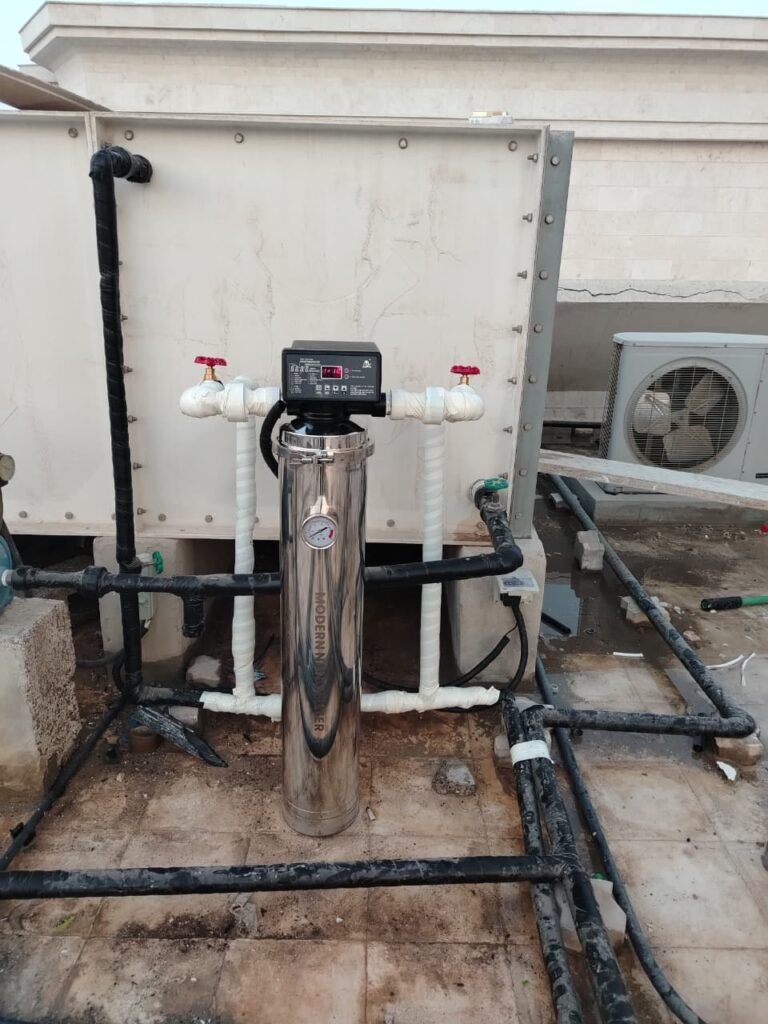
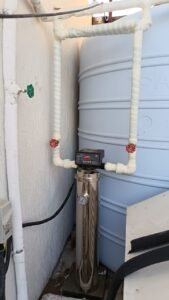
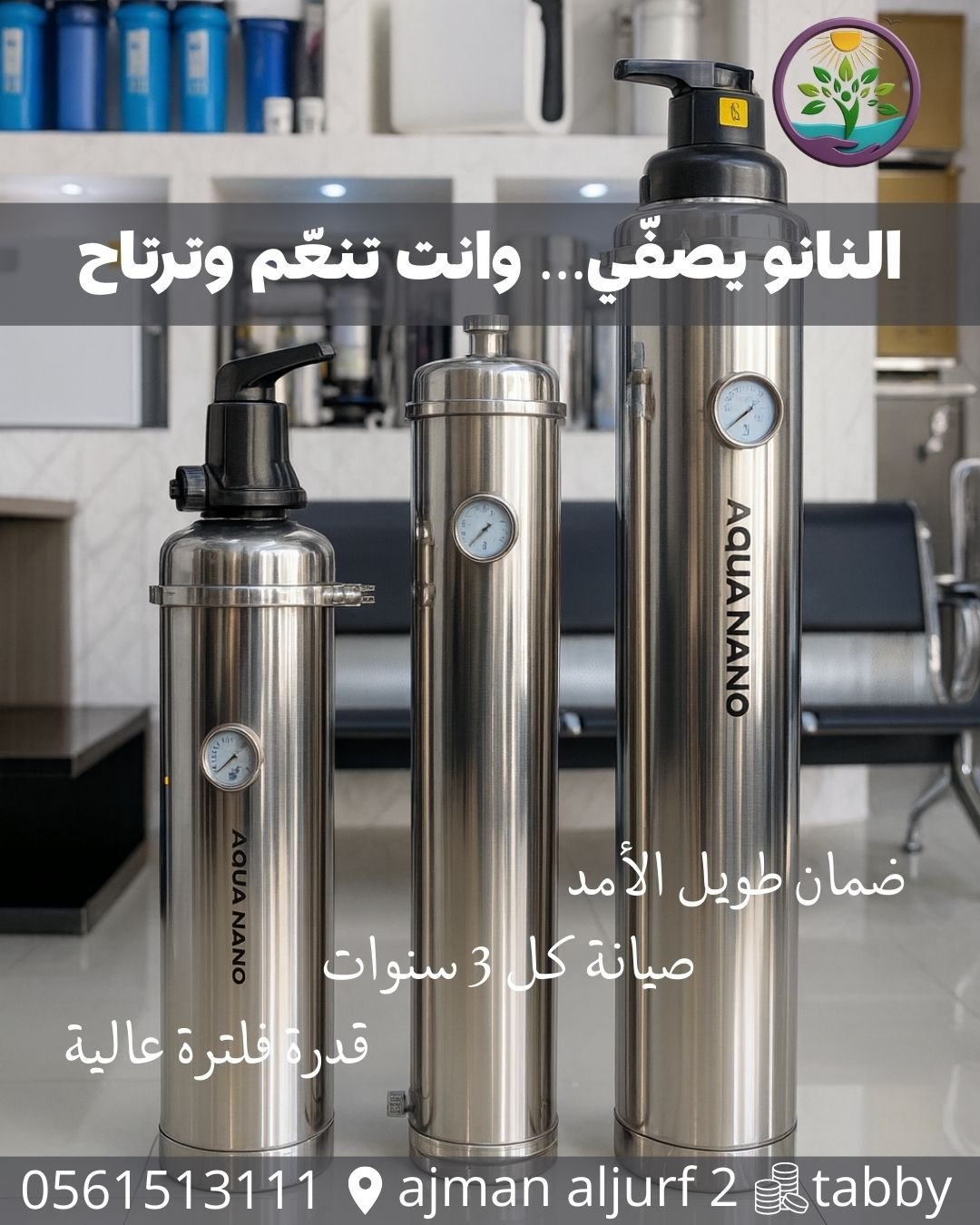
This is one of the finest and highest-quality water filters, achieving filtration precision down to a single micron. It is manufactured from 316SS stainless steel that resists damage and rust, and it is a highly effective weapon against every kind of virus, algae, and fine particle. Its operating system moves far beyond all traditional methods; it is a modern type built with premium technology, working efficiently for more than fifteen years. Click here for more information about the Nano filter.
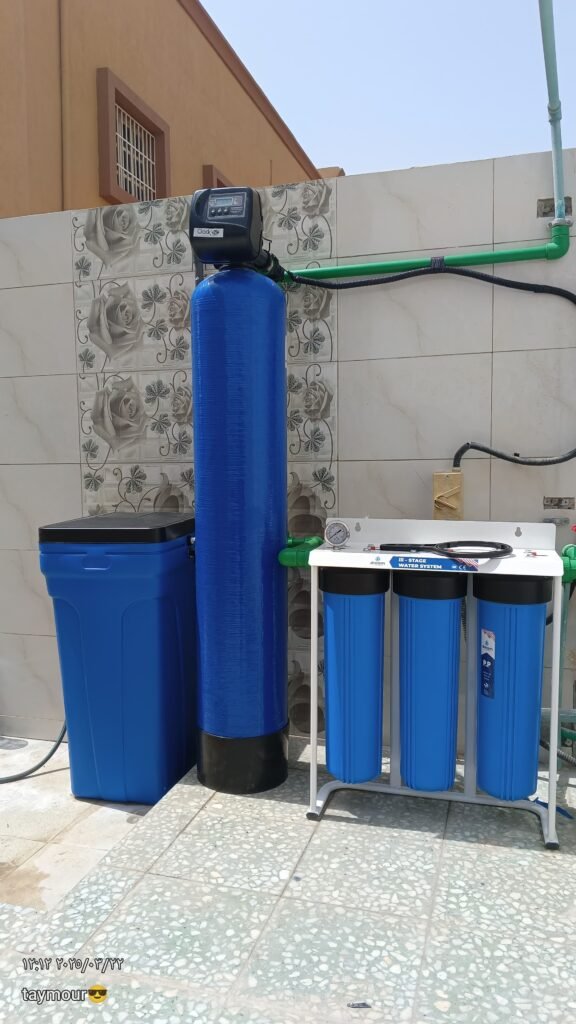
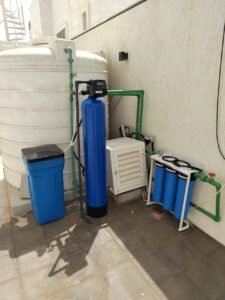
This is a blend of several precision filters working together. It operates through three stages of deep filtration to treat water at a high quality, and it features three housings along with a softener that guarantees the complete removal of every trace of limescale, hard-water deposits, and suspended dust. Click here for more details about tank filters.
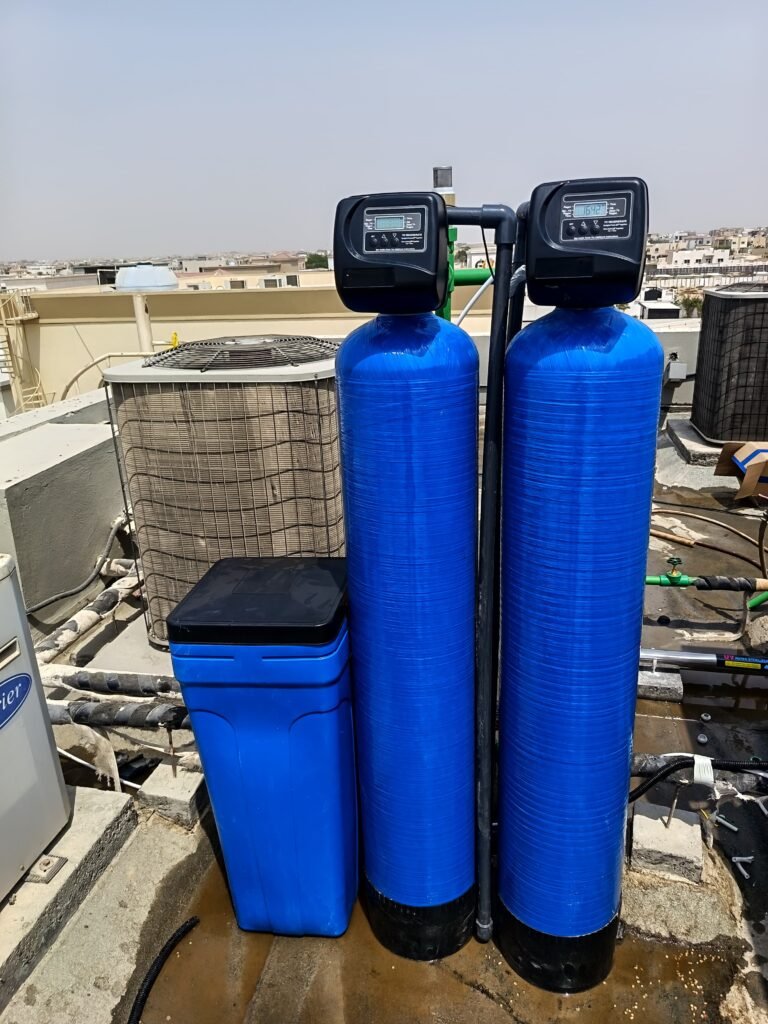
This is a series of sequential filters containing sand, gravel, and activated carbon. These systems guarantee sustainable, high-quality water that is completely pure and free of any organic or inorganic impurities. Click here for more details about the American automatic filter system.
As for the difference between them, the automatic version comes with smart control systems and sensors that clean the filters automatically, whereas the manual version is cleaned by hand.
Both, however, operate with high efficiency and deliver the best possible results, and either one can be the ideal choice for an underground water tank filter. Click here for more information about the American manual filter system.
All of these filters are available at Naher Al Rabwah for Trading in Water Equipment and Technologies in Ajman, Al Jurf 2, and their contact number is +971 56 151 3111
This is genuinely the most important step, and it is the one that determines how the filter will operate afterwards, because a small mistake during installation can lead to a major change in the way the filter performs.
For that reason, you must choose a credible, trustworthy company for the task, such as Naher Al Rabwah for Trading in Water Equipment and Technologies in Ajman, Al Jurf 2, which has worked in the field of solving every water problem for a very long time and holds several advantages that make it well suited to handle the installation of any type of water filter for tanks.
Below, we will outline the main points involved in installing an underground tank filter:
First and foremost, after selecting the company that will carry out the installation and send us the specialists to do so, from technicians to engineers, the second stage is to choose the right place to fit the filter, and in particular whether it sits before or after the tank. In other words, do we want to purify the source or the water inside the tank itself? Based on this single point, we may find a significant difference in the results later on.
Taking the criteria into account:
We must define exactly what we need by understanding the criteria for choosing the filter that suits us, and only then do we select an underground water tank filter that matches our requirements. The most important of these criteria are the quality of our water and its degree of contamination, where the filter will be used, the size and scale of the tank, and the budget we have set aside for the filter.
At this stage, we must connect the filter to the supply line using clamps or other tools designed specifically for this purpose.
Next, the filters must be filled with the required media of gravel, sand, and activated carbon, though they may already come pre-packed. After that, the final connections are made, thereby completing the installation of the underground or overhead tank filter.
Finally, and importantly, before the technicians leave we should run a trial of the filter to see whether it is working properly or not. It is absolutely vital to make sure there are no leaks, and regular checks must be carried out to prevent any leak, blockage, or other malfunction.
If you would like to enjoy water that is pure, healthy, long-lasting, environmentally friendly, and of high quality all at once, you must follow these guidelines and recommendations:
First, you should make sure the tank lid is tightly sealed, to prevent any kind of insects or reptiles from getting inside, as well as any other pollutants such as dust and grit.
Also, take good care of keeping the tank clean, especially the underground one, as it needs to be cleaned at least twice a year and disinfected on a regular basis.
In addition, you should use a small pump that helps push the water through the filter more easily and with greater efficiency.
You should also avoid using tanks made from poor-quality materials that are not environmentally friendly or not well insulated, as they can deteriorate and corrode quickly.
If you own an underground water tank filter, you must monitor the smell, taste, and colour of the water on a regular basis, and the moment you notice any change you should carry out the necessary checks on the filter straight away.
To sum up, we find that providing an underground water tank filter is essential so we can seize two benefits at the same time. The first is that we will get water that is completely pure, clear, free of impurities, and pleasantly scented. The second is that, thanks to the underground tank, we will keep the water cool for as long as possible, and we can even extend the cooling time or lower the temperature further by fitting a chiller alongside the filter, giving us a complete, integrated water treatment system.
You must deal with a trustworthy company so as not to waste your money in vain, and I can see no company better than Naher Al Rabwah for Trading in Water Equipment and Technologies in Ajman, Al Jurf 2 to be your main go-to for installing, maintaining, and purchasing a water tank chiller and an underground or overhead tank filter that matches your needs. You can get in touch with the company right away on +971 56 151 3111.
At the end of the day, in this article we have offered a detailed explanation of the underground water tank filter, along with a definition of what an underground tank actually is. We highlighted the importance of having a filter within your home’s water system, walked through the steps for installing any filter, and added a list of the most important filter types available on the market.
A complete guide to choosing and installing
A complete guide to the Japanese water
A practical 2026 guide to choosing the
A practical guide to water filter systems
 Call Us - اتصل بنا