Home Water Filter Installation Guide & Prices in UAE
A complete guide to choosing and installing

Amid growing environmental challenges and the worsening problem of water pollution across many regions, protecting water quality has become an essential priority that can no longer be ignored.
With villas, residential apartments, and industrial facilities relying so heavily on underground tanks to store water, the need for a complete purification system before that water is used has become truly urgent. As a result, installing a filter for an underground water tank is no longer a luxury or a secondary option; it has become a genuine necessity dictated by modern life, because water is the lifeline we all depend on, and it must be protected, its resources used wisely, and it must be kept clean for every kind of use.
This filter is the first line of defense against the impurities, limescale, algae, and chemicals that can seep into tank water over time. In this article we take a detailed look at why installing an underground water tank filter matters, how to choose the right one, the steps involved in fitting it, the main types available, and the most important tips for keeping your water clean for years to come.
Underground tanks are an integral part of the water-supply system in countless residential, commercial, and industrial properties.
These tanks are often used to store water for long periods or to keep it cool, which makes them far more exposed to contamination than rooftop tanks. Over time, impurities, sediment, limescale deposits, algae, and germs build up inside them, turning once-clean water into a potential source of many illnesses, some of which can be extremely dangerous.
The value of installing an underground water tank filter lies in the sturdy protective shield it provides against these contaminants. It purifies the water before you use it, guaranteeing healthy, safe water whether for drinking or for all the other everyday tasks such as cooking, bathing, ablution, and washing dishes and fruit.
An underground tank is a large vessel, available in several different sizes, that is usually buried below ground level and used to store water for long periods, whether for drinking, irrigation, or daily household use.
These tanks are normally made from durable materials such as reinforced steel or polyethylene, and they are insulated from the surrounding soil to keep the water safe.
The problem is that the location of these tanks makes them more vulnerable to external factors that can contaminate the water, such as:
Dust and sand seeping in from the surrounding soil.
High temperatures that encourage bacteria and algae to multiply.
The possible entry of insects and reptiles.
Weak or damaged exterior insulation.
That is why installing a filter for an underground tank is one of the essential preventive measures for protecting the quality of the water inside it, whether the tank is fully or partially buried under the ground, or even mounted in the garden of the home.
Signs that show you need to install an underground tank filter:
There are several clear indicators that warn you the time has come to install a filter for your underground tank, the most important of which are:
A change in the colour, taste, or smell of the water:
If you notice that the water coming from your taps has an unpleasant taste or a strange odour, or that it has turned cloudy, this is a clear sign that impurities, algae, or chemicals are present inside the tank.
A build-up of impurities at the bottom of the tank:
This is especially the case when water has been stored inside the tank for a very long time. You will then notice obvious sediment or scaling on the tank walls, strong proof that the water needs preliminary filtration, which calls for installing an underground tank filter.
Blocked pipes and taps:
Limescale and fine sand can clog the water lines throughout your home, leading to repeated faults in washing machines, water heaters, and taps.
Frequent illness:
If cases such as diarrhoea, typhoid, or cholera spread among family members, the main cause may well be contaminated tank water that has not been disinfected or filtered.
Contamination of the main water source:
If you rely on an untrustworthy supply such as well water or an ageing feed network, it is essential to install an underground tank filter before the water enters the tank, not at the point where it leaves.
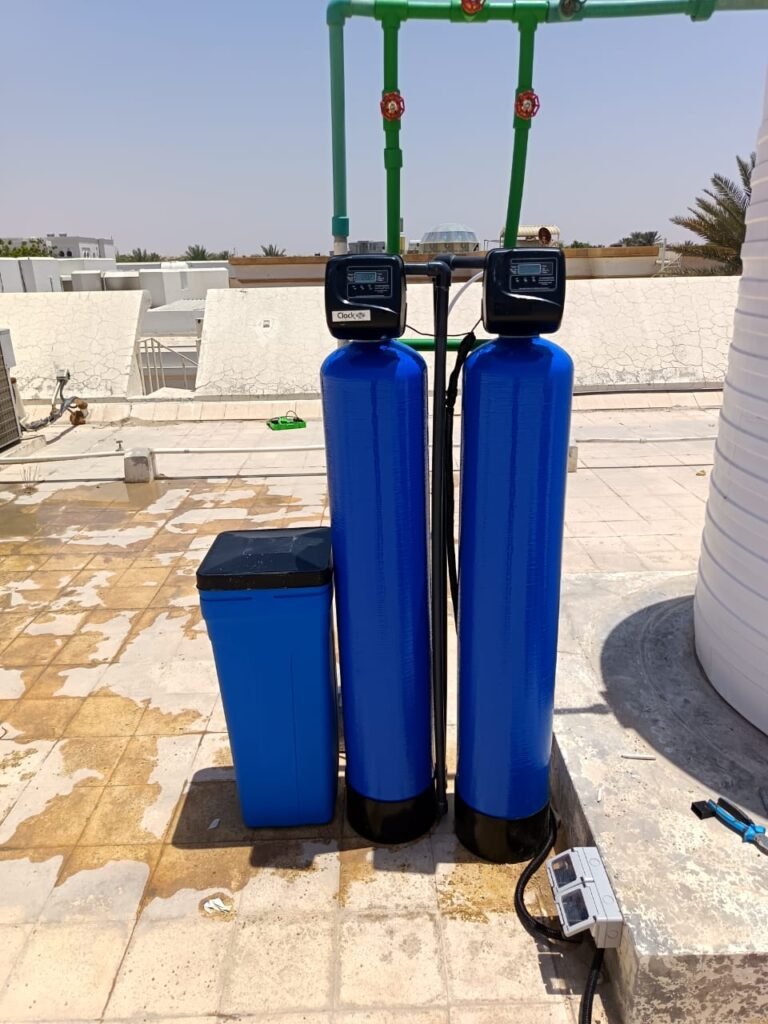
There is no doubt that when we decide to fit water filters to our tanks, we are hoping to achieve the satisfying results we set out for. In reality, installing an underground tank filter delivers a great many benefits, the most important of which are:
This is especially true when you use modern filters, which do far more to remove every form of algae, limescale, dirt, and even fine organic matter, delivering water that is safe for drinking, cooking, and washing at a high level of safety and quality.
The risk of illnesses caused by polluted water, such as digestive-system diseases, skin infections, and kidney problems, is greatly reduced. This matters even more if the household includes elderly people, someone with a chronic illness, or a young child.
Filtering the water before it reaches your home appliances protects them from limescale and damage, extending their working life.
A feed filter actually prevents harmful materials from settling at the bottom of the tank or on its walls, which reduces the need for frequent cleaning and prolongs the tank’s lifespan.
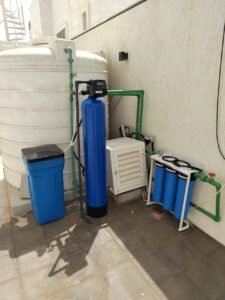
The market offers many filters designed to meet the varying needs of different underground tanks. The most notable of them are:
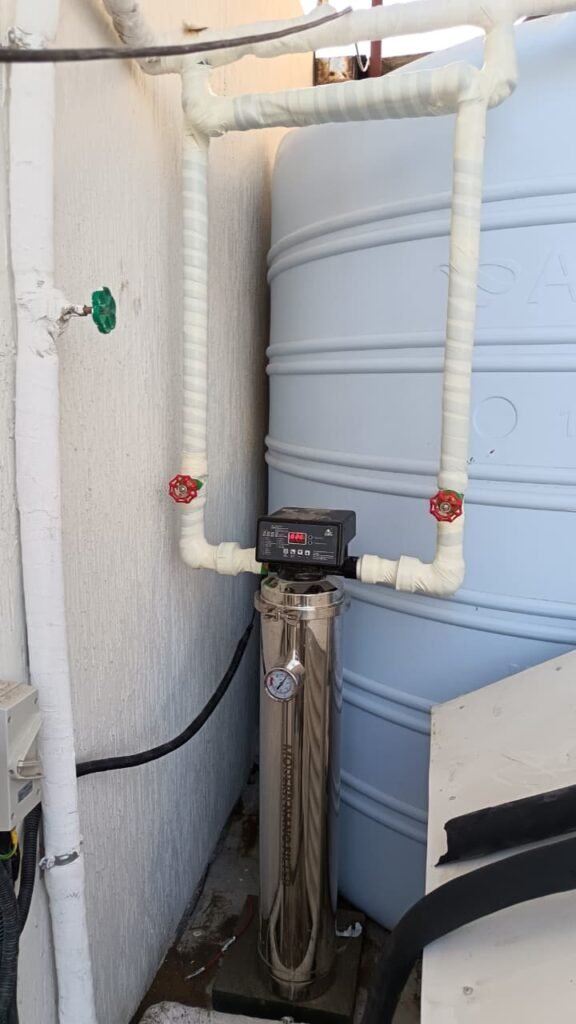
This is considered one of the best and most important filters on the market. Although its price is a little higher than the others, it stands out for the following:
Filtration precision down to 1 micron.
Made from corrosion-resistant stainless steel.
A self-cleaning system.
Ideal for homes and commercial buildings.
A service life of more than 15 years.
Advanced and modern, operating through programmed sensors.
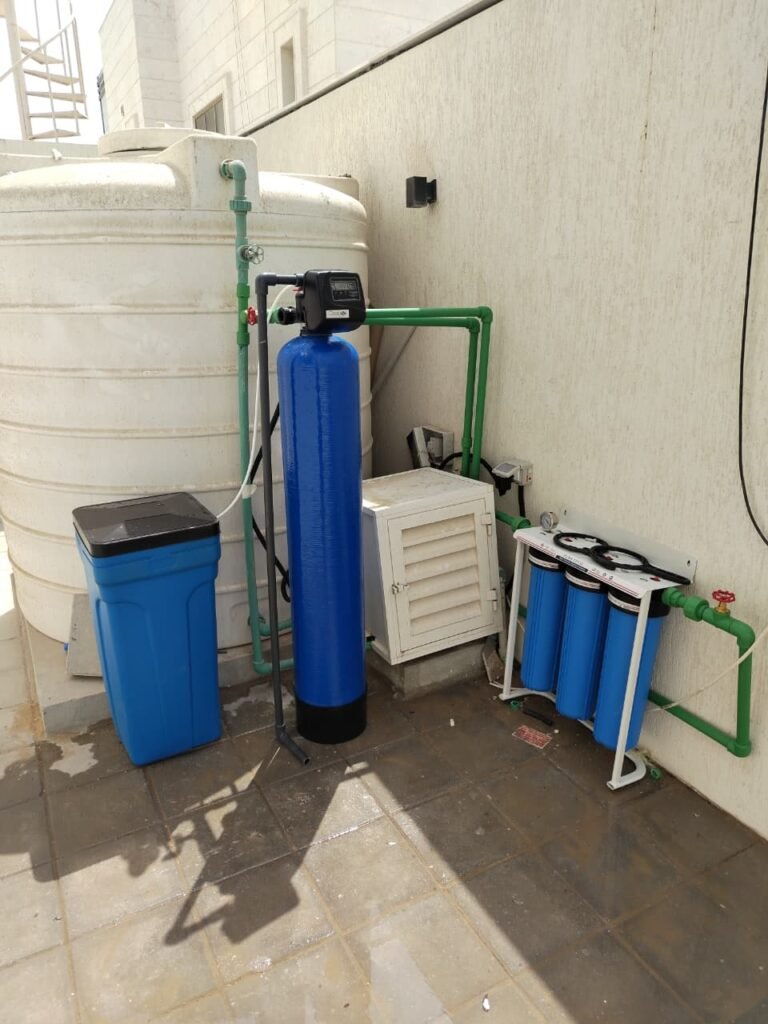
This filter combines several types of filtration in one unit, which enhances its useful qualities. The most important of these are:
It consists of three consecutive filtration stages.
It contains sand, gravel, and activated carbon.
It removes fine sediment and limescale along with unpleasant odours.
Suitable for large tanks.
Its price suits every budget.
It mounts on the wall, so it takes up very little space. For more details about the Triple Jumbo filter system, click here.
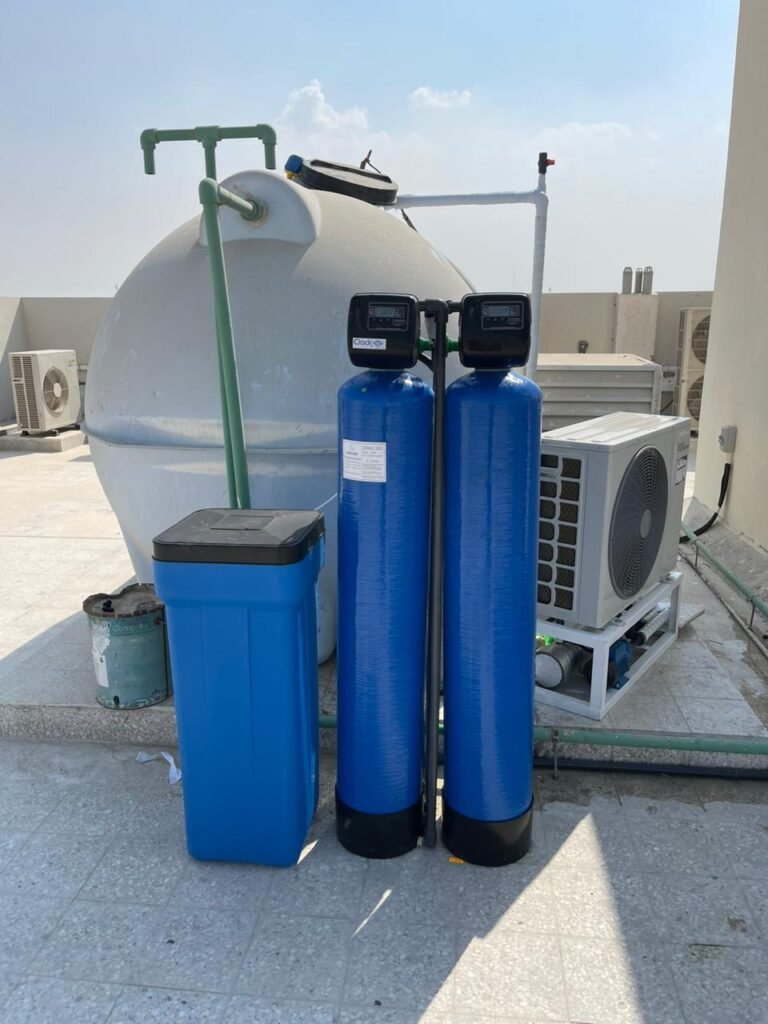
The best-selling filter on the market thanks to its advanced design, modern systems, and how easy it is to use and to clean its cartridges. Its features include:
A complete system that contains more than one filter.
It removes both chemical and organic impurities.
A smart control system that cleans itself automatically at set intervals.
Suitable for buildings that consume large quantities of water.
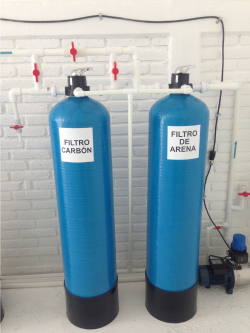
It is very similar to the automatic American filter system, but cheaper and less sophisticated, so it involves no complications during operation. Its main features are:
It relies on manual intervention to clean the cartridges.
Lower cost than the automatic version.
Suitable for medium-sized household use.
All of these filters and more are available from Naher Al Rabwah Water Treatment L.L.C in Al Jurf 2, Ajman. You can ask about them in more detail by calling +971 56 151 3111. From time to time the company runs a variety of offers on these filters, such as reducing their price or including a complimentary kitchen filter with one of them.
In truth, there are broad, fundamental steps for installing every filter, whether we are talking about fitting a filter to an underground tank or a rooftop one. However, the installation process demands precision and a high level of technical expertise. In other words, if you have only a basic knowledge of plumbing you may be able to fit the filter yourself, but not with the professionalism that spares you from mistakes later on.
The installation goes through several key stages, which are:
Choosing the filter supplier:
We should browse and research carefully to find a trustworthy source to buy the filter from and to deal with, so that they send us a specialist team to install the underground tank filter and more. Naher Al Rabwah Water Treatment L.L.C in Al Jurf 2, Ajman is the very best choice, and you can get in touch on +971 56 151 3111.
Determining the type of filter:
The filter must match the size of the tank, the level of water contamination, and the space available for installation, as well as the allocated budget, along with the other criteria that help us choose the type of filter system, whether sand-based, chemical, or otherwise.
Preparing the site:
The main feed line is shut off and the tank is temporarily emptied. In addition, you must make sure there is a safe, suitable place to install the filter, away from direct sunlight and high humidity.
Purchasing the filter and its equipment:
Once we know where our filter will go, we should contact the company to buy the filter together with its accessories, or we can visit the company in person to buy it ourselves.
Carrying out the connections:
After the purchase is complete, the company sends the team that specialises in installing underground tank filters at the agreed time. They then fix the mounting bases, connect the supply pipes, and place the filter in its correct position, whether at the inlet or the outlet, after which the filtration units are filled with the designated media such as sand or carbon.
The test run:
The system is run for a trial period to confirm that the connections are sound, the water pressure is strong, and there are no leaks or faults.
Once you have obtained the filter that suits you perfectly, and made sure the technicians have installed the underground tank filter exactly as required, it becomes your turn to help this filter perform even better. Here are the most important pointers:
Clean the underground tank at least twice a year.
Make sure the tank lid is tightly sealed.
Carry out periodic maintenance on the filters and check the water pressure.
Use a pump to push the water through if the distribution network is weak.
Keep an eye on the colour and smell of the water at all times.
It is extremely important to deal with a company that specialises in water treatment to guarantee the quality of the products and services.
Naher Al Rabwah Water Treatment L.L.C is one of the leading companies working in this field inside the UAE, and it has the best team of technicians and engineers who specialise in installing filters for underground and rooftop tanks and more. The company provides:
Every type of water tank filter, of the highest quality and most advanced design.
Warranties on all of its equipment and devices, lasting at least 5 years.
A free installation service.
Continuous inspection and periodic maintenance.
High-quality tank coolers.
Desalination stations for wells.
Delivery to every emirate in the country.
For enquiries and contact: +971 56 151 3111
Naher Al Rabwah Water Treatment L.L.C in Al Jurf 2, Ajman offers competitive prices on every style of filter it stocks:
Nano filter price: just AED 4,800.
Jumbo filter price: this type is up to you, at just AED 2,499.
Cost of the automatic and manual American filter systems:
The automatic version costs AED 4,400, while the manual one costs AED 4,300, both with similar features and prices.
All prices include free installation and delivery.
The difference between installing an underground tank filter and a rooftop one:
When talking about installing water filters, we need to distinguish between the two most common types of tank, rooftop tanks and underground tanks, because the installation location, the nature of the connections, and even the goals of using the filter differ for each type:
Here the filter is usually fitted to the water line leaving the tank, or before the water enters it (depending on the type of filter and its purpose).
The aim of this is to protect the customer from contamination caused by storing water for a long time, or from impurities that may settle at the bottom of the tank.
You must make sure the filter is fastened securely to avoid any leak, and it is best to choose filters that can handle low pressure, since gravity-fed water flow is under less pressure compared with the underground tank. For more information about the rooftop tank filter, click here.
An underground tank filter is often installed before the water is pumped up to the rooftop tank (a primary filter), or on the line running from the underground tank to the pump network or the taps.
The purpose of this is to protect the water pump and household appliances from large impurities, and to ensure that the water reaching the rooftop tank, or the final point of use, is clean.
However, this requires filters that can withstand the high water pressure generated by the pump, and they must be fixed firmly so they can cope with the vibration and the strong flow.
In short, the filter in the rooftop tank focuses mainly on purifying stored water before use.
The filter in the underground tank, on the other hand, focuses on purifying the water entering the system or used for pumping, and it usually withstands higher pressure.
In the end, we find that installing a filter for an underground tank is no longer merely an optional extra; it is an essential element of any modern water-supply system. By choosing the right type and fitting it correctly, we take a fundamental step towards improving quality of life, cutting long-term costs, and then protecting the health of the family, as well as making it possible to preserve household appliances. Every drop of pure water is therefore an investment in your health and your quality of life.
To close, we would like to recommend the first company of its kind in the field of water purification and treatment as a source of trust for you, ready to solve every problem related to your water sources. For more information, call +971 56 151 3111.
A complete guide to choosing and installing
A complete guide to the Japanese water
A practical 2026 guide to choosing the
A practical guide to water filter systems
 Call Us - اتصل بنا