Home Water Filter Installation Guide & Prices in UAE
A complete guide to choosing and installing

The Umm Al Quwain water desalination plant was established because water is the foundation of life and the backbone of every thriving civilisation. Throughout history, human communities have always settled around sources of fresh water such as rivers, springs and wells.
Yet as populations and economies have grown across the world, consumption has climbed to levels that at times outpace nature’s ability to renew these sources, especially in arid and semi-arid environments like the United Arab Emirates.
One of the most striking examples of such an environment is the Arabian Gulf region, defined by its hot, dry and unforgiving desert climate, its sparse rainfall and its high evaporation rates. Together these conditions create a genuine scarcity of fresh water and drive up the concentration of salts in whatever water is available.
Faced with this reality, relying on the desalination of seawater and brackish groundwater has become an unavoidable strategic necessity. Technological advances over recent decades have made desalination far more efficient and far more affordable than it once was, enabling nations to build vast plants capable of meeting the needs of millions of people.
This is especially true in the United Arab Emirates, one of the most advanced and forward-looking countries in the world. Because the water sector is one of the most vital areas tied directly to national security and long-term sustainability, it has received a far greater share of attention and investment.
The Emirate of Umm Al Quwain stands out as a clear illustration of the water challenges facing the northern Emirates. It suffers from a shortage of natural water sources and rising groundwater salinity driven by a range of factors, which is precisely why building advanced facilities such as the Umm Al Quwain water desalination plant has become a cornerstone of achieving sustainable water security and guaranteeing a stable supply for current and future generations.
In this article we take a closer, clearer look at the (( Umm Al Quwain water desalination plant )), offer an overview of the broader water situation in the emirate as a whole, and explain why fresh water matters so much and why securing it is so essential.
Across the Arab world, and in the Gulf region in particular, seawater desalination has become the essential pillar for meeting people’s fresh-water needs.
The desert climate and the scarcity of natural water resources have pushed the region’s countries to invest heavily in desalination projects for decades, to the point where the UAE, Saudi Arabia, Kuwait and Qatar now rank among the largest producers in the world.
Estimates suggest that more than seventy percent of the drinking water in the Gulf Cooperation Council states comes from these projects, a figure that reflects just how deeply the region depends on them.
Desalination has fuelled rapid urban growth and met the surging demand created by population increases and economic expansion, so much so that it is now impossible to imagine the wheel of development turning without it, click here to learn more about desalination plants for brackish well water.
Among the most prominent of these projects is the Umm Al Quwain water desalination plant, which supplies vital fresh water throughout the emirate.
As technology has advanced, the region has moved away from energy-hungry thermal distillation towards reverse osmosis techniques, which offer far greater efficiency and much lower energy consumption.
Even so, challenges remain, whether in terms of economic cost or the environmental harm caused by discharging concentrated, returning brine back into the sea.
As a result, the Gulf states are integrating renewable energy, and solar power in particular, into their desalination processes to cut fuel use and reduce harmful emissions.
These countries are no longer content simply to consume; they have become leaders in developing and exporting modern desalination technologies, strengthening their global standing, exactly as reflected in the evolving design of the Umm Al Quwain water desalination plant.
In reality, the repeated use of salty or contaminated water can be a leading cause of numerous negative effects, whether on our health, on the equipment in our homes, or even on the environment. The most significant of these effects are as follows:
A high salinity level in drinking water can raise the likelihood of high blood pressure, one of the most dangerous conditions of all and a leading cause of heart attacks and hardening of the arteries.
In addition, a high sodium concentration can lead to kidney failure or cardiac problems in some patients suffering from diabetes and other conditions.
Water begins to taste unpleasant as the salt content rises, which automatically leads us to drink less, and that in turn has disastrous consequences for our nervous system and even for our skin, our behaviour and our overall psychological state, click here to learn more about installing well-water desalination plants.
There is no doubt that salty water corrodes pipes and household appliances, particularly those that rely heavily on water such as the washing machine, the iron, taps, the shower, dishwashers and the like.
It causes limescale deposits that damage water heaters and filters, especially the kitchen filter, as well as cooling units, air conditioners and other equipment.
Salinity and water contamination push up maintenance costs and shorten the operational life of the fixtures and the equipment they contain, along with every plumbing system. In a very short time you may need to replace all of your home’s pipework because it has been ruined by contaminants and salts.
Disposing of the returning ((brine)) into the sea represents a real environmental challenge, since it raises the water’s salinity and directly affects marine life.
For this reason, some modern projects are turning to advanced treatment systems to soften the environmental impact and more, something we see clearly in the most up-to-date project of all, the ((Umm Al Quwain water desalination plant)).
In truth, Umm Al Quwain is one of the smaller emirates in terms of area, yet it has faced numerous problems since the very beginning because of the scarcity of fresh water, its sparse rainfall and the high level of contaminants and salinity in whatever water is present.
Because of its proximity to the sea, the groundwater in its coastal areas suffers from seawater intrusion, which drives up the salinity level and renders the water unfit for drinking or for other uses such as agriculture, bathing, or even cooking, manufacturing and the like.
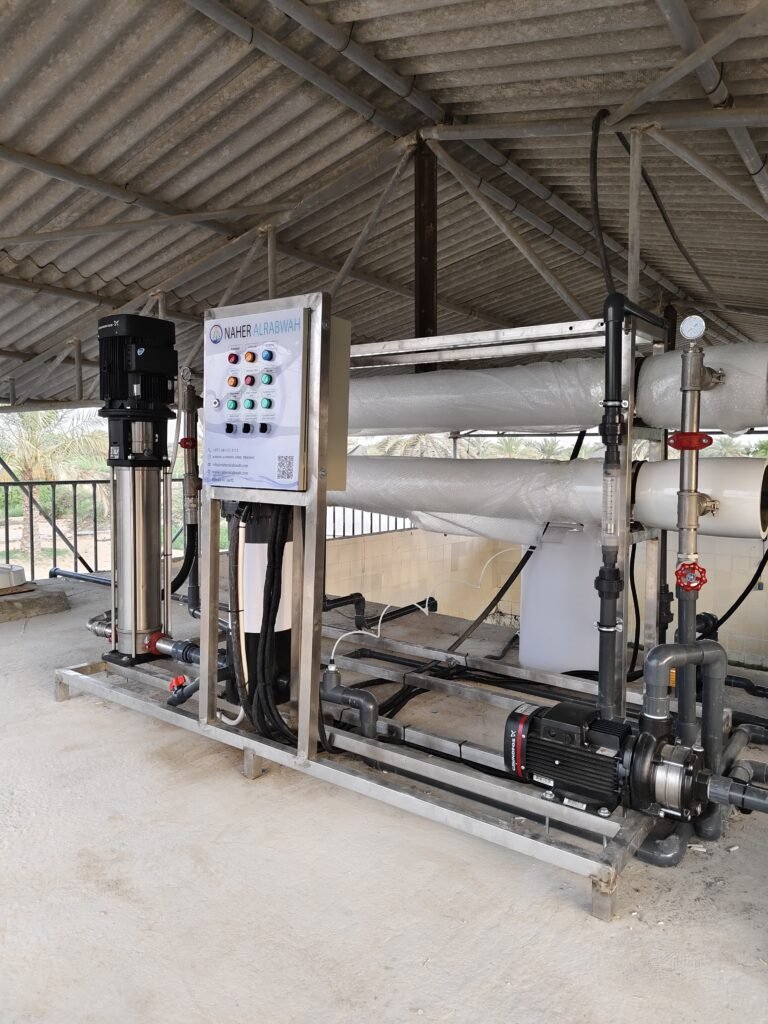
For this reason, the United Arab Emirates helped establish the Umm Al Quwain (Naqa’) plant, which is considered one of the largest reverse osmosis plants in the world with a production capacity of 150 million gallons per day. At the same time, everyone should make an individual effort to secure fresh water and preserve our most precious resource, water, by working tirelessly to install an Umm Al Quwain water desalination plant.
The aim is to meet the needs of Umm Al Quwain and the northern Emirates such as Sharjah and Ras Al Khaimah, and to reduce dependence on brackish groundwater, without abandoning that water in the search for another fresh source, but instead desalinating it and making it suitable for drinking and every other use.
Despite the widespread desire to obtain an Umm Al Quwain water desalination plant, doing so remains somewhat difficult because of the following obstacles:
sparse rainfall and a scarcity of natural water sources.
A sharp rise in the salinity of the groundwater.
A scarcity of fresh water in the emirate and an almost complete reliance on desalination plants.
The need for efficient distribution networks that guarantee water of suitable quality reaches every area.
The high cost of installing and maintaining the plant, together with the cost of the fossil fuel needed to run it.
There are always innovative, effective solutions that can be applied to drive further progress and pursue perfection in every field. When it comes to the Umm Al Quwain water desalination plant, we find that there are many solutions that could be the path to salvation, giving us pure, fresh water fit for every use as well as for drinking, without any fear or unease about an unpleasant taste. The most important of these solutions are the following:
an intensive search for water sources in Umm Al Quwain, whether salty or fresh.
Working to desalinate any salty water that is found, whatever its salinity level or the quantity discovered.
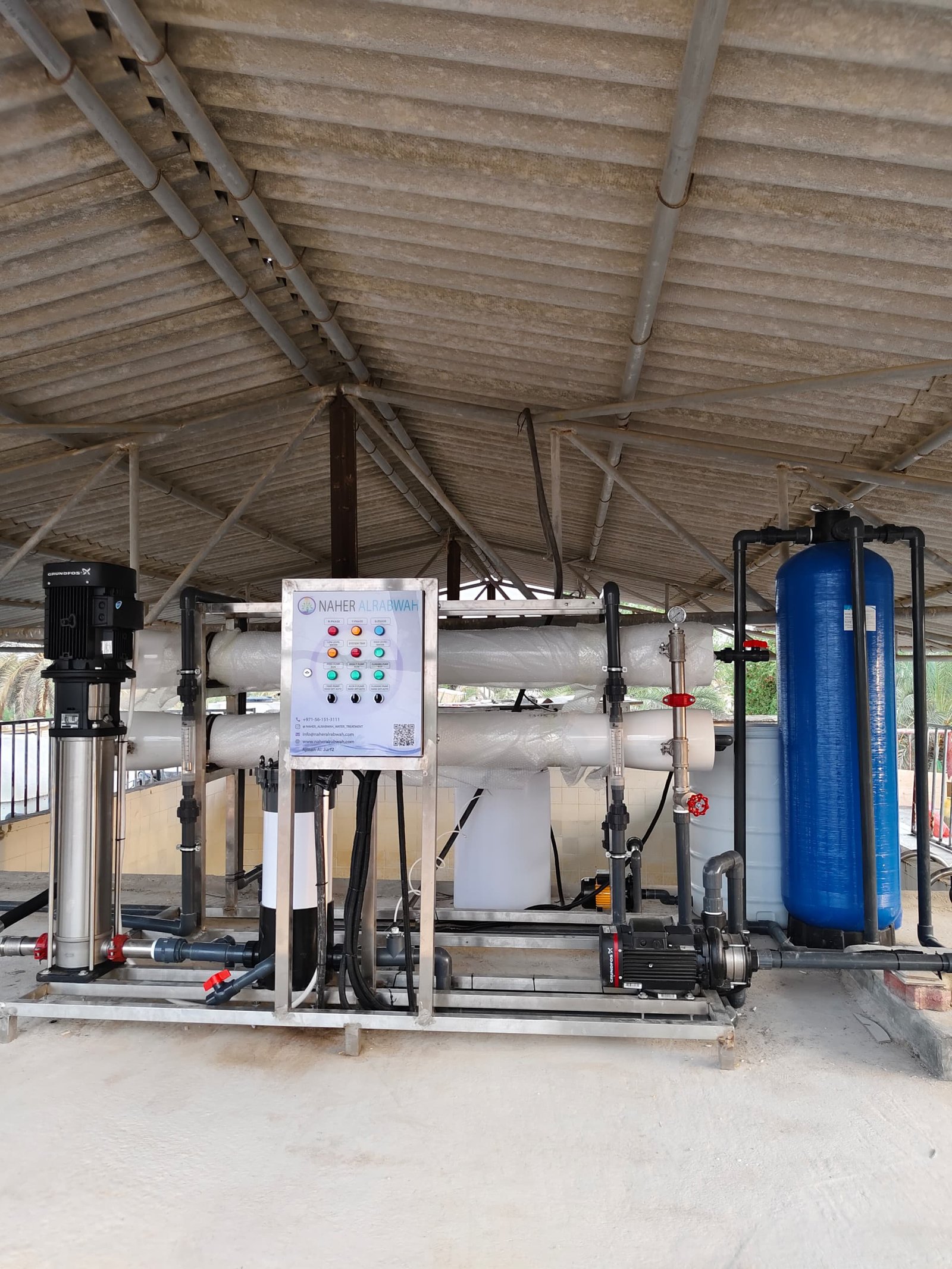
Dealing with companies that specialise in installing well-water desalination plants, such as (( Naher Al Rabwah for Trading in Equipment and Water Technologies in Ajman, Al Jurf 2 / +971 56 151 3111 )), to help install the most important Umm Al Quwain water desalination plant.
Trying to replace electrical power sources and fossil fuel with alternative solar energy.
Working to raise awareness of the importance of obtaining pure, fresh water, whether through campaigns on social media platforms or through cultural seminars and lectures that draw everyone’s attention to the need to comply with health and safety standards and to obtain an Umm Al Quwain water desalination plant without delay.
In recent times, a large number of leading companies in the field of water treatment and desalination, as well as water cooling and filtration, have appeared. Some of these companies, however, have not proven trustworthy and have not properly demonstrated their competence in this area, while others have seen their successes exceed every expectation, for example Naher Al Rabwah for Trading in Equipment and Water Technologies in Ajman, Al Jurf 2 (( +971 56 151 3111 )).
These are the most important criteria that any company must meet in order to be the ideal choice for installing desalination plants, especially when we are talking about installing an Umm Al Quwain water desalination plant, an area that demands great focus and a thorough awareness of every possible risk and eventuality:
One of the most important qualities of a successful company is that, when a specific installation date is agreed, for instance, the team of technicians actually turns up at the time arranged in advance.
Any company that deals directly with water must have hygienic, first-rate tools for handling the water we drink every day, and the equipment must be robust and able to withstand the surrounding conditions no matter how harsh and demanding, especially where the Umm Al Quwain water desalination plant is concerned.
If we have already installed a water filter, a cooler, or any kind of plant at all, such as an Umm Al Quwain water desalination plant, then whenever a fault or malfunction occurs and we want to contact the company at once, every channel should be open to speak with the specialists and find out what needs to be done. This is exactly the case with Naher Al Rabwah, whom you can reach on +971 56 151 3111.
Prices must be kept reasonable, or at least sensible, given the sharp rise in costs across the region. It is essential to obtain an Umm Al Quwain water desalination plant at a fair price that suits the circumstances, the equipment, the size of the plant and the degree of contamination and salinity in the water, click here to learn more about the prices of well-water plants in the UAE for 2025.
When installing an Umm Al Quwain water desalination plant, or any other plant anywhere in the United Arab Emirates, make sure you are given a quality guarantee of at least one full year.
All of these qualities and more can be found at Naher Al Rabwah for Trading in Equipment and Water Technologies in Ajman, Al Jurf 2, whose contact number is +971 56 151 3111.
When dealing with well-water desalination plants, and particularly the Umm Al Quwain water desalination plant, it is advisable to commit to regular inspection and maintenance of the equipment whenever needed, to ensure it keeps running at high efficiency and to extend its intended operating life.
You must also take care to sterilise and clean the filters at all times, and to replace them on a regular basis in order to prevent the pipes from clogging as contaminants and salts build up, or the water’s colour and smell from changing, which lowers water quality.
The quality of the raw water must also be monitored continuously so that the necessary adjustments can be made to the desalination systems according to the level of salts and minerals.
On top of this, it is important to train several individuals who are directly responsible for operating the equipment correctly, and to use precise measuring tools to track performance indicators such as pressure.
Finally, it is a good idea to keep operating records for the Umm Al Quwain water desalination plant to document faults and repairs, which helps improve efficiency and avoid future problems, click here to learn more about desalination plants in the UAE.
Ultimately, having reviewed the various water-treatment technologies and desalination methods, especially those relating to the Umm Al Quwain water desalination plant, along with the effects of using salty or contaminated water on human health and even on the environment, we have concluded that desalination is no longer merely a short-term technical fix. It has become an integrated strategic choice for guaranteeing the sustainability of water resources in arid regions such as the Arabian Gulf and the United Arab Emirates.
Yet despite the challenges of high operating costs, energy consumption and the environmental impact of brine discharge, the continuous development of reverse osmosis systems and energy-recovery technologies, along with the reliance on renewable sources, has turned desalination into an effective tool for confronting water scarcity. But before all of that, we must choose the ideal company to help us solve every problem of water contamination and salinity, such as Naher Al Rabwah for Trading in Equipment and Water Technologies in Ajman, Al Jurf 2 (( +971 56 151 3111 )).
In closing, and looking to the future, the success of the water strategy at the Umm Al Quwain water desalination plant, and in the UAE as a whole, rests on two main pillars: expanding desalination projects using clean, efficient technologies, and spreading a culture of rational consumption and demand management for water.
A complete guide to choosing and installing
A complete guide to the Japanese water
A practical 2026 guide to choosing the
A practical guide to water filter systems
 Call Us - اتصل بنا