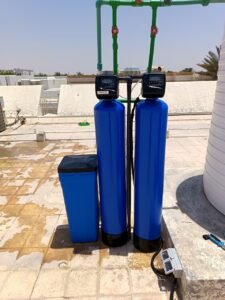
Home Water Filter Installation Guide & Prices in UAE
A complete guide to choosing and installing

A water storage tank, whether it sits on the roof or below ground, is a core part of the water supply system in most homes and facilities across the UAE. As awareness of water quality continues to grow, fitting a proper overhead tank water filter has shifted from a nice-to-have to a genuine necessity. These filters act as the first line of defence against a wide range of contaminants, including suspended particles, silt, dust, and sediment, so that the water reaching your taps stays clean and safe for every household use.
Beyond that, a good filter helps stop algae from forming and keeps the tank cleaner over the long term. The value of an overhead tank water filter is not limited to areas that struggle with poor water quality; it matters even in places where the source water is naturally clean, because water can easily pick up contamination on its journey from the public network into your overhead tank. When no filter is fitted, dirt and sediment build up over time, which can rust the tank, harm your family’s health, and reduce the efficiency of every appliance connected to the water line. In this article, we look at the real risks of leaving your overhead tank unfiltered, explain which filtration systems perform best, and show you how to get the most out of them.
Many people assume that simply having an overhead tank guarantees clean, contaminant-free water, but that belief is mistaken. Water often carries fine, invisible impurities, and over time, especially in hot and dusty conditions, tanks can attract insects and encourage the growth of algae and bacteria as the water temperature rises, turning the tank into a perfect breeding ground for contamination. In reality, using this water poses a serious threat both to your health and to your home’s plumbing infrastructure. The most common risks of going without a filter include the following.
Unfiltered water may contain organic and microbial contaminants that trigger serious illnesses such as chronic inflammatory bowel conditions, diarrhoea, and in some cases poisoning. On top of that, it can lead to skin problems such as allergies, itching, and rashes.
Contaminated water damages the tank itself, encouraging sediment to settle and, over time, causing the tank to corrode and deteriorate. Skipping a filter also takes a toll on pumps, pipes, water heaters, and taps, leading to blocked pipework and a build-up of salts and deposits inside sanitary fittings. This reduces their efficiency and forces you into frequent repairs or early replacement.
One of the less obvious benefits of fitting a filter, particularly on an overhead tank, is that you end up using far fewer cleaning products in your day-to-day chores. Contaminated or hard water often struggles to lather with soap, which pushes people to use larger amounts of detergent when washing or cleaning, and that steadily eats into the household budget month after month.
In addition, electrical appliances such as washing machines and water heaters suffer from limescale and sediment build-up, which drives up electricity consumption as their operating efficiency drops. That is why installing an effective overhead tank water filter does more than deliver healthy, clean water; it also improves the overall performance of your appliances and reduces both electricity and cleaning-product use, boosting the economic and environmental efficiency of any home or facility.
The importance of water quality goes well beyond household chores and touches almost every part of daily life, because clean water is essential for cooking, laundry, bathing, and even watering your indoor plants.
When water is not pure, it does more than put our health at risk; it also affects the overall quality of our lives. Hard water, for example, can leave limescale on glassware and appliances, shortening their lifespan and pushing energy consumption higher.
Impurities and sediment can also clog showerheads and tap outlets, restricting water flow and turning a simple routine such as taking a shower into an uncomfortable experience.
Fitting an overhead tank water filter tackles these problems at the source, delivering high-quality water for every household use and helping create a healthier, more comfortable home. An overhead tank water filter is, ultimately, an investment in your long-term health and comfort.
Growing awareness of environmental challenges and their impact on water resources places a greater responsibility on individuals and organisations to safeguard the sustainability and purity of their water. Industrial pollution, rapid urban expansion, and climate change all add pressure to the quality of the water available to us. For this reason, installing an overhead tank water filter is no longer a luxury; it has become an urgent necessity to protect ourselves and our families from the invisible contaminants that can reach our homes through the water network.
These filters act as an effective barrier against fine particles, micro-organisms, and unwanted chemicals, ensuring that every drop of water that reaches us is pure and safe to consume. Maintaining these filters regularly is an essential part of keeping the water consistently clean.
The market offers a wide range of water purification systems designed for overhead tanks, and each works in a slightly different way. That said, certain systems have consistently proven their high performance in this field.
In practice, Naher Al Rabwah, based in Ajman (Al Jurf 2, contact number: +971 56 151 3111), stands out as one of the leading suppliers of the best overhead tank water filter systems in the United Arab Emirates. Its most notable options include the following.
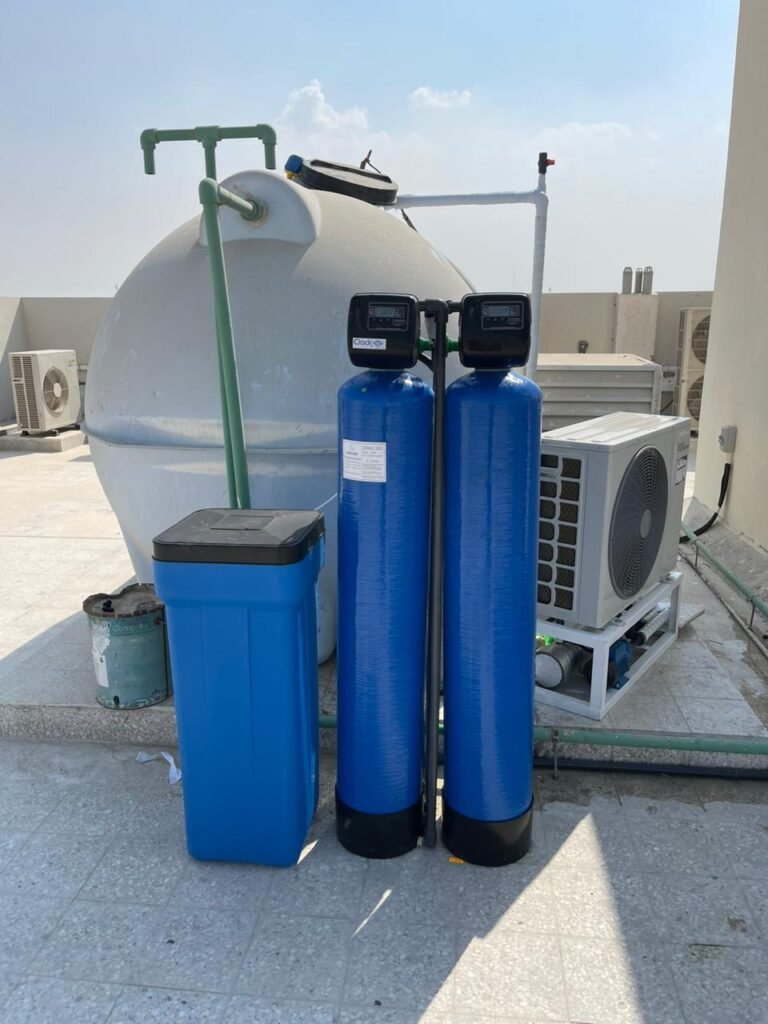
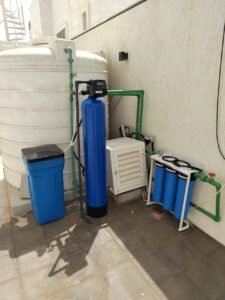
This system is recognised worldwide for its outstanding performance in purifying tank water. It is built around a central sand filter containing an activated carbon media that removes contaminants such as dust and fine sediment down to five microns, delivering deep, thorough purification before the water ever reaches your home’s appliances. The system also includes a water softener unit that completely removes limescale-forming minerals. Its role is not limited to purification; it also improves the taste and smell of the water and gives it a noticeably softer feel,
which has a positive effect on both the comfort and health of everyone in the household while protecting sanitary fittings from damage and corrosion. On top of that, the system runs at high efficiency without demanding routine maintenance, and it features an automatic self-cleaning cycle every 35 days that saves the effort, time, and cost of manual backwashing. With this system, Naher Al Rabwah also includes a complimentary kitchen filter that provides fresh, refreshing water for drinking and cooking. Click here for more details on choosing the best home water filtration system
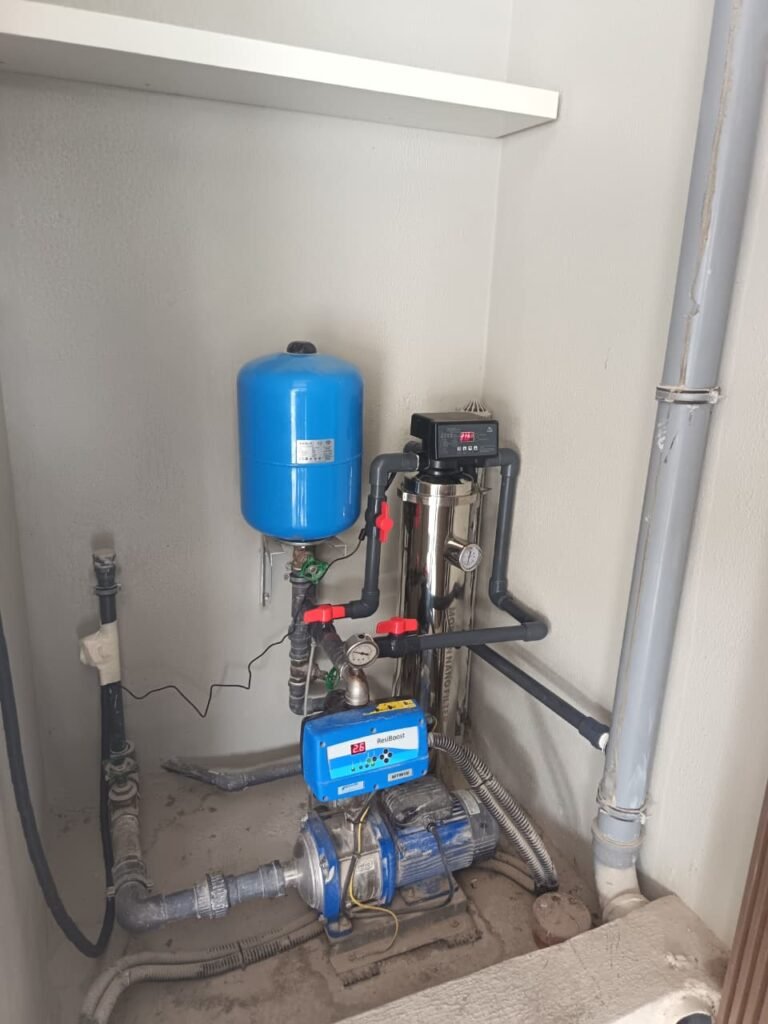
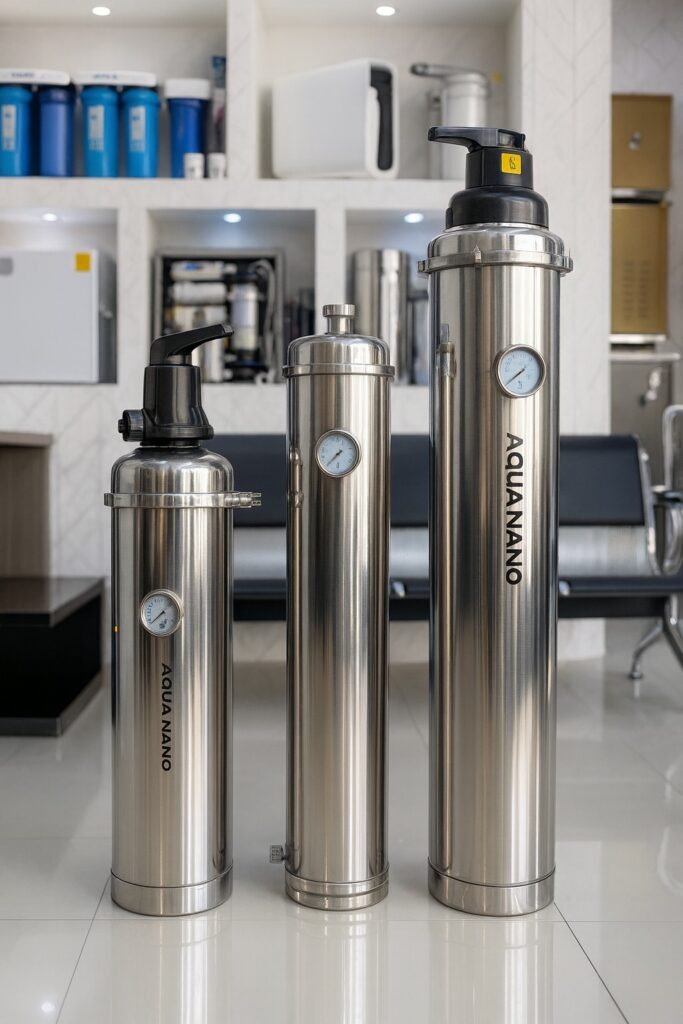
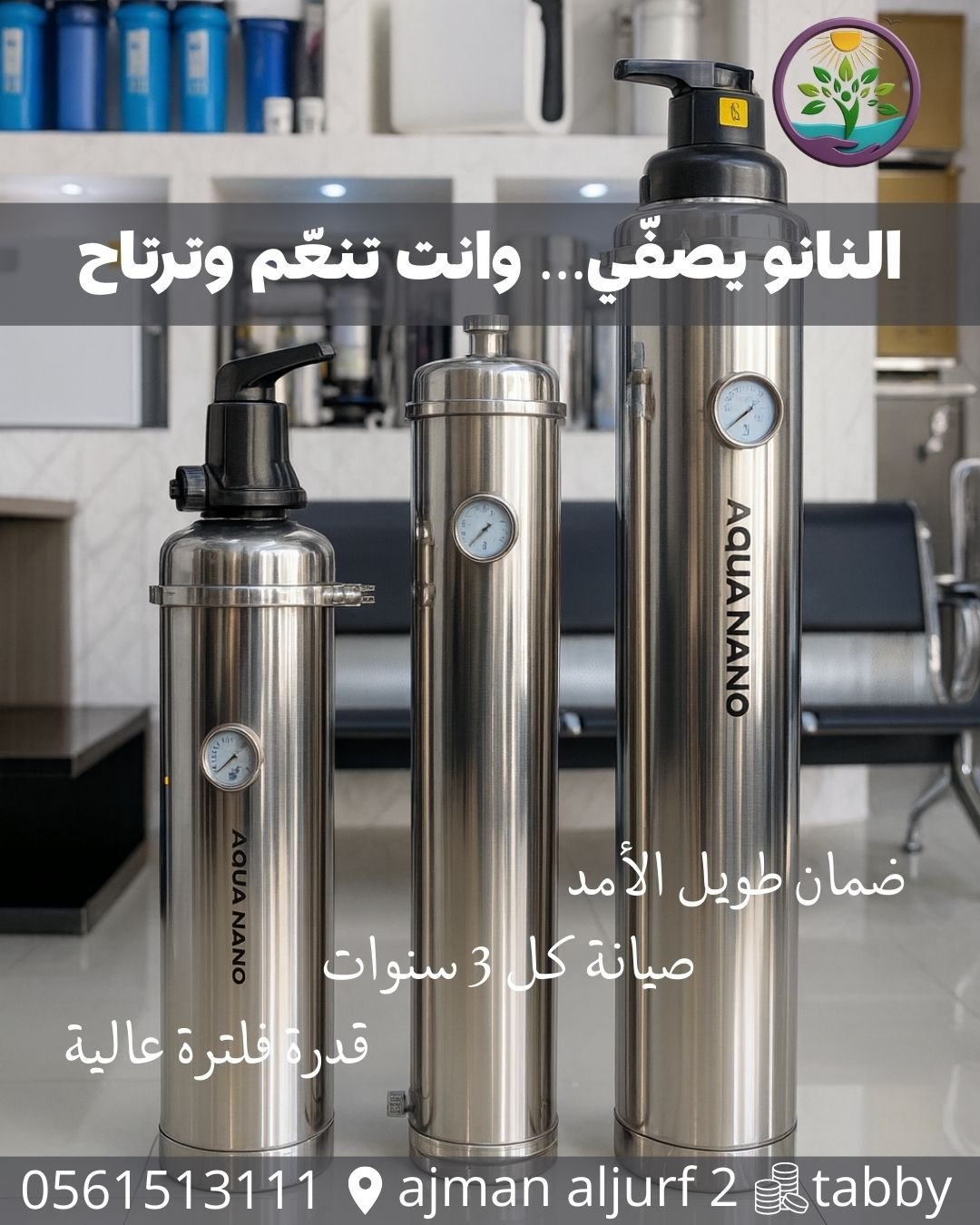
The nano system represents the very latest in global water purification technology and is one of the most effective solutions for delivering excellent results over the long term. Naher Al Rabwah offers it as a preferred choice precisely because it does not rely on conventional purification methods. The nano filter works at an extremely fine molecular level to remove even the smallest contaminants, providing high-efficiency filtration that eliminates bacteria, fungi, algae, and all suspended matter inside the tank. It also strips out sediment and prevents limescale layers from forming, all while maintaining steady water pressure and preserving the water’s natural physical and chemical properties. This filter is ideal for homes that struggle with humidity and limescale build-up in pipes and sanitary fittings.
The nano filter is manufactured entirely from rust- and moisture-resistant 316SS stainless steel, giving it exceptional durability to withstand harsh environmental conditions such as high heat and humidity. This makes it especially well suited to installation on overhead tanks and ranks it among the finest overhead tank water filters ever developed.
Furthermore, this system boasts a huge output capacity of up to 3,000 litres per hour (18,000 litres per day), making it ideal for meeting the needs of large homes, villas, high-rise residential buildings, and major commercial and industrial premises. With proper use, the unit can last 15 years or more, requires no added salts or chemicals during purification, and needs no complicated routine maintenance over the long term.
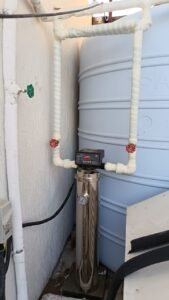
Installing an overhead tank filtration system takes real expertise to guarantee the highest-quality, purest water. Choosing the best type of overhead tank water filter is not enough on its own; you also need a carefully planned installation that suits the type of tank, its location, and the available space. This is where Naher Al Rabwah offers professional installation solutions for overhead tank filters, backed by a complete team that specialises in water services. There are two main ways to install the filter.
With this approach, water coming from the public network or from a ground tank (depending on the feed system) is purified before it enters the tank. As a result, only clean water free of contaminants and sediment is stored inside the tank. This method is effective at providing pure water and extending the tank’s lifespan, though it may call for periodic cleaning of the tank to prevent dust build-up, especially where the tank is exposed to dust and heat.
In this case, water is stored inside the tank without prior purification, and filtration takes place at the tank outlet, just before the water reaches the user. This method is generally more effective because it delivers freshly purified water directly to the user, which is especially valuable when the overhead tank is at risk of contamination at any point. Even so, this option still requires periodic cleaning of the tank to prevent dirt and sediment from accumulating and damaging the tank, since the tank becomes a focal point for contaminants before purification takes place.
Even when you choose a high-quality overhead tank water filter, you cannot reach peak performance without following proper care guidelines. The most important of these are set out below.
You should stick to regular inspections of every filter component, particularly overhead tank filters that rely on activated carbon media, which need consistent maintenance and cleaning depending on the water type and running hours. Although some automatic filters (such as the CLACK system) come with self-cleaning technology, it is still wise to monitor the system’s performance roughly every six months to confirm it is working efficiently.
When buying tank water filters or spare parts, it pays to deal with globally trusted companies such as Naher Al Rabwah in Ajman, Al Jurf 2, which supplies every type of device and accessory from reliable, high-performance sources and offers multi-year warranties on all of its overhead tank water filter systems.
The filter’s location should be chosen with care so that it suits the position of the overhead tank and sits in a space large enough to allow easy access for ongoing inspection and checks. Valves should be fitted before and after the filters to stop unpurified water from passing into the tank and to make maintenance easier when needed without cutting off the building’s water supply.
Regular cleaning and disinfection of the tank: to keep water pure over the long term, the overhead tank should be cleaned and disinfected at least once every five months, even with a high-efficiency filter in place. Overhead tank filters purify the water entering the tank, but they do not clean the tank itself or treat any contamination that develops inside the tank after purification.
Given the environmental and climate challenges facing many parts of the United Arab Emirates, it has become essential to pay close attention to the quality of the water pumped from public networks into overhead tanks and to purify it quickly by installing an overhead tank water filter.
Pure water is the foundation of health and safety and a vital element in ensuring a good quality of life. This is never achieved by chance; it requires planning and continuous research to arrive at the best, most effective solutions. Installing an overhead tank water filter is one of those modern, proven methods that has demonstrated its effectiveness, unlike traditional approaches that demand considerable time and effort and can be costly without delivering satisfying results.
In closing, this article has shared valuable information about installing overhead tank water filters. The UAE market is full of purification systems, but you should look for filters that combine efficiency, quality, easy installation and maintenance, and genuinely effective end results. Based on outstanding real-world experience, we recommend working with Naher Al Rabwah in Ajman (Al Jurf 2, contact number: +971 56 151 3111). The company provides comprehensive services in purifying and cleaning overhead tank water, offers the best international filter brands, and includes free delivery and expert installation across all areas, along with warranties on every system it supplies.
A complete guide to choosing and installing
A complete guide to the Japanese water
A practical 2026 guide to choosing the
A practical guide to water filter systems
 Call Us - اتصل بنا