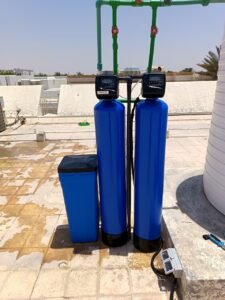
Home Water Filter Installation Guide & Prices in UAE
A complete guide to choosing and installing

Brackish well water desalination plants were developed to protect fresh water, one of the most essential resources for life. As global demand for water keeps rising, many countries and local communities have begun searching for alternative solutions to meet their needs, especially in the arid and semi-arid regions that depend heavily on well water, such as the United Arab Emirates.
However, it has been observed that many of these wells contain salty or brackish water, making it unfit for drinking or for direct agricultural use without treatment, as well as for a range of other everyday applications.
This is exactly where brackish well water desalination plants prove their worth — a strategic solution that delivers high-quality, pure water while conserving this precious resource and improving the way we invest in it.
In today’s article we will explore brackish well water desalination plants in depth: the technologies behind them, the challenges involved, the outlook for future development, the prices of these plants on the market, and the leading companies that install and price them.
In reality, salinity refers to the concentration of dissolved salts in water, and it is usually measured in parts per million (ppm) or by electrical conductivity (EC).
There are several reasons behind the rising salinity of groundwater, the most important of which are the following:
When a well is dug close to a saline water source, the underground seepage of seawater or salt lakes into the groundwater layers can be one of the leading causes of salty water in wells.
In addition, the intense evaporation that water sources experience in hot regions causes a significant rise in the concentration of salts in both the soil and the water.
On the other hand, the natural dissolution of salt-bearing rocks and minerals as groundwater passes through them can be a major reason for the increase of salts in the water.
Human pollution — such as the excessive use of chemical fertilizers, factory waste, and similar sources — is also a cause of water contamination and salinity.
According to international standards, water whose salt content exceeds 1,000 parts per million is considered unsuitable for drinking. All of this was the main driver behind the emergence of brackish well water desalination plants, whose purpose is to produce water fit for use and drinking while preserving this vital lifeline. Instead of endlessly hunting for clean sources, the focus shifts to treating the polluted and salty water in order to improve water quality across the various regions of the UAE and the wider world.
Brackish well water desalination plants did not appear in the United Arab Emirates by accident; rather, they were the result of many factors that posed a genuine obstacle for the country’s residents in particular. The UAE is a land that suffers from a dry climate, high temperatures, and naturally scarce water resources. Under the scorching sun, the little water that is available evaporates and later turns salty, becoming unfit for any use. From here came the idea of brackish well water desalination plants — to remedy the situation and deliver several rewarding results, the most important of which are:
Securing pure, fresh drinking water for remote and off-grid areas.
Supporting the agricultural sector by reducing the salinity of irrigation water, since salty water causes serious damage to crops and trees when used for irrigation, particularly in hot climates.
By installing brackish well water desalination plants, we safeguard public health by preventing many diseases linked to salt-contaminated water from reaching our bodies — such as cholera, food poisoning, kidney failure, dry skin and the loss of its elasticity, and more.
One of the most valuable outcomes we have gained thanks to brackish well water desalination plants is the sustainability of water resources amid scarce rainfall. In the past, whenever a salty well was found, everyone would abandon it and move on to dig another, hoping to strike pure, fresh water — wasting time, effort, money, and even water resources in the process. Today, with desalination plants, salinity and pollution are no longer an obstacle. Once a well is dug and discovered to be salty, a plant is installed straight away to desalinate the water and make it ready for use and drinking within just a few hours.
In truth, water desalination literally means removing the dissolved salts and minerals from water in order to reduce its salinity to a moderate level that allows us to use that water for drinking or for domestic, industrial, and agricultural purposes.
The desalination process generally relies on one of the following two approaches:
Physical or membrane methods, such as reverse osmosis or nanofiltration, in which salt-filtering membranes are used — much like a fine sieve for water — separating the salt particles and contaminants from the pure water molecules.
Thermal methods, such as multi-stage distillation, which work through heating processes that separate the salts from the water. For more details about water desalination plants in the UAE, click here.
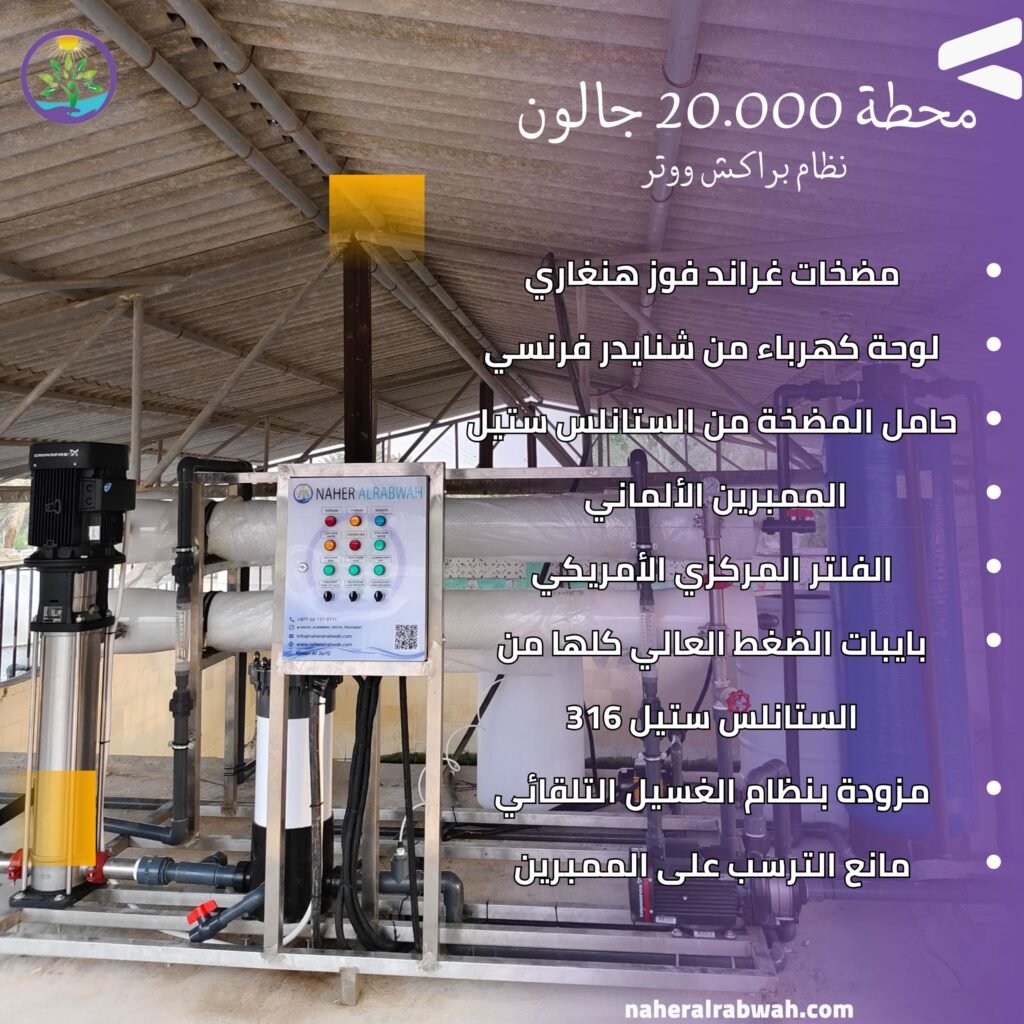
Building on the scientific principles behind manufacturing brackish well water desalination plants, it has been established that the most important technologies to apply in a plant’s operation are the following:
The physical method (reverse osmosis):
This is the most widely used method around the world. It works by pushing salty water under high pressure through a membrane resembling a fine white cloth that blocks salt particles from passing and allows only clean water to flow through.
Advantages: high efficiency, excellent water quality, and ease of operation.
Disadvantages:
Relatively high energy consumption, and the need to maintain or even replace the membranes from time to time.
The nanofiltration principle:
Here, a large portion of the salts is removed, especially divalent salts such as calcium and magnesium. This technology is ideal for agricultural use, or it can serve as a pre-treatment stage ahead of reverse osmosis.
Thermal distillation:
This includes techniques such as multi-stage flash distillation or multi-effect distillation. The principle relies on evaporating the salty water and then condensing the vapor to obtain pure water.
Advantages: high water quality, and suitability for extremely saline water.
Disadvantages: high energy consumption.
Electrochemical desalination:
In this type of technology used to run brackish well water desalination plants, ionic membranes and an electric current are used to separate the salts. It is effective only for water with low to medium salinity.
A comparison between brackish well water desalination technologies:
When comparing the technologies of brackish well water desalination plants, we find that reverse osmosis leads the field in terms of efficiency at removing salts, as it produces high-quality, fresh water. However, operating it requires moderate electricity consumption and a relatively acceptable setup cost, along with the need for regular care of the membranes.
As for nanofiltration technology, it is less capable of removing all salts compared with reverse osmosis, but it consumes less energy and suits applications that do not require complete salt removal, such as certain types of irrigation or light industrial use.
On the other hand, thermal distillation stands out for its exceptional ability to handle extremely saline water and produce very pure water, but it demands high energy consumption and higher setup costs, which makes it better suited to large, well-funded projects such as factories, villa compounds, residential apartment blocks, parks, and hotels.
Finally, electrochemical desalination comes in as an economical option for water with low to medium salinity; it consumes less energy and has low initial costs, but it does not achieve the same water quality that the other desalination methods provide in cases of high salinity.
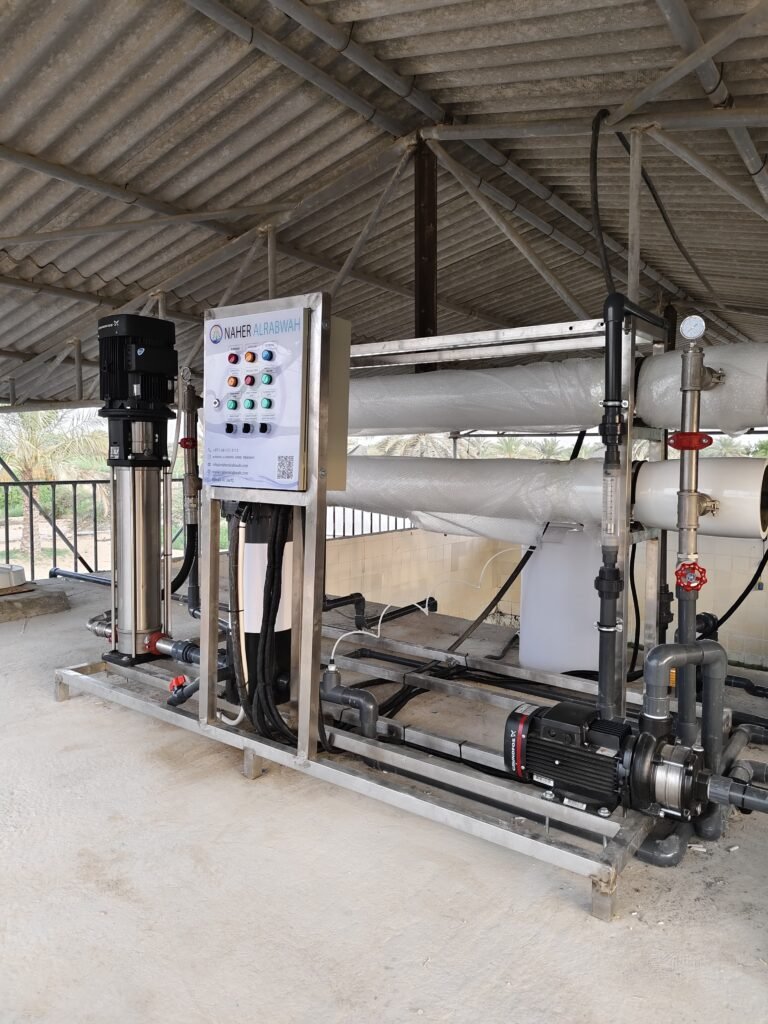
First and foremost, we must choose the company we want to handle the selection of the plant type according to the right standards, along with the ongoing installation, inspection, testing, and maintenance of brackish well water desalination plants. For that reason, the company must have extensive experience and full command of every detail of desalination plants. One of the most prominent such companies in the United Arab Emirates is Naher Al Rabwah for Water Equipment and Technology Trading in Ajman, Al Jurf 2 — to get in touch, call +971 56 151 3111. After contacting the company and agreeing on an installation date, we begin the following operating stages:
To begin with, water is extracted from the well using submersible pumps that must be of high manufacturing quality so they can withstand the water’s salinity and lift the water to the surface.
Here, all forms of sediment, impurities, and large particles are removed using mechanical filters that may be either automatic or manually operated.
This is achieved by using gravel, sand, or activated carbon filtration units.
After that, anti-scaling agents are added.
One of the brackish well water desalination technologies is applied (reverse osmosis, ion exchange, distillation, or another method).
Finally, the pH level is adjusted and the necessary minerals are added to improve the taste, after which the storage and distribution process takes over.
Despite the great success that desalination plants have achieved overall — and in the United Arab Emirates specifically — there are still many obstacles and challenges that prevent us from obtaining the very best results. The most important of these challenges are:
Clogging of the filtration membranes as a result of the build-up of salts, parasites, limescale, and sand.
The high cost of energy supply sources, especially in the thermal methods.
The burden of how to dispose of the reject water (the brine solution) in an environmentally safe way.
A shortage of the technical expertise needed for maintenance and operation.
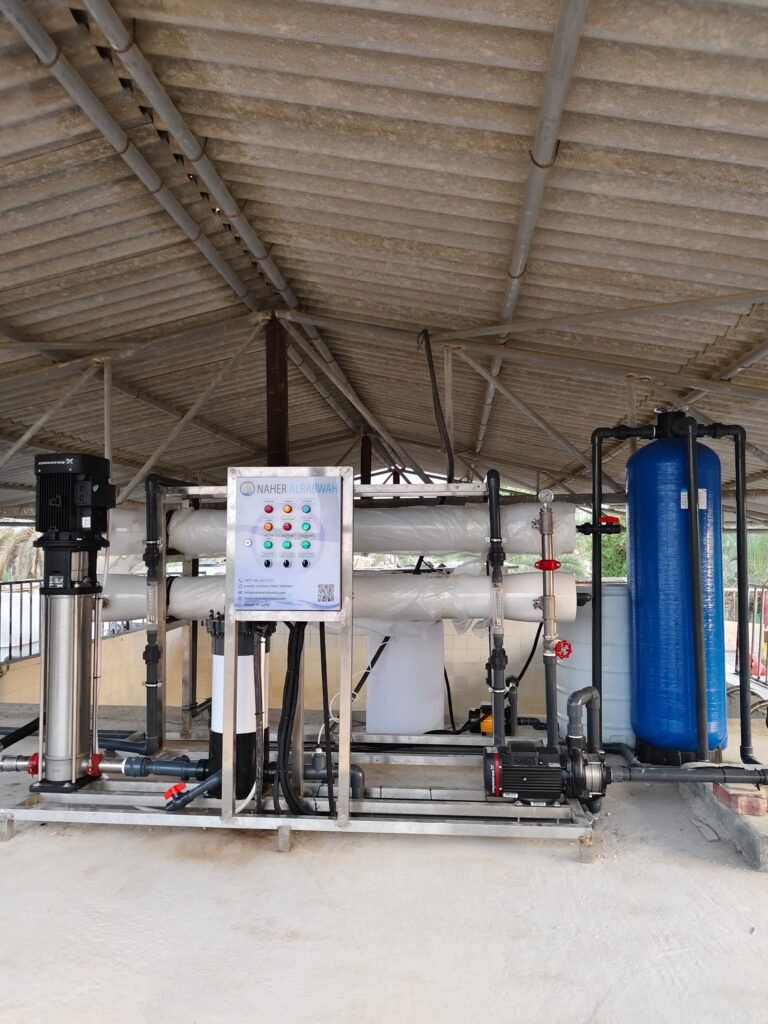
The operation of brackish well water desalination plants can be improved through many innovative solutions and smart ideas, the most important of which are:
Using solar energy to reduce electricity costs.
Developing membranes with a longer lifespan and greater resistance to clogging.
Reusing the reject water after blending and treating it with innovative methods.
Integrating desalination systems with rainwater harvesting systems.
Devising effective solutions to dispose of salts and contaminants more easily.
Despite the benefits of desalination, it does carry environmental effects if it is not managed properly, such as:
Increasing the salinity of the surrounding groundwater.
Harming marine life when the brine solution is discharged into the sea.
Carbon emissions resulting from energy consumption.
The prices of brackish well water desalination plants in the UAE vary considerably depending on the specifications of each project. They can start from a few thousand dirhams and reach into the millions of dirhams in the case of large, high-capacity plants. The price is determined by a set of factors, most notably: the plant’s capacity and daily production ability; the type of technology used, whether reverse osmosis, distillation, or nanofiltration; the degree of salinity or pollution of the water in the target well; in addition to the cost of materials and equipment such as pipes and electrical and hydraulic connections, as well as the cost of installation and maintenance.
In this context, Naher Al Rabwah for Water Equipment and Technology Trading in Ajman offers competitive, carefully priced packages, along with long-term warranties and professional installation and maintenance services. This makes its products among the best on the market in terms of the balance between price and quality, especially since it relies on highly efficient components with a long operating life that reduces the need for frequent maintenance and lowers the overall cost in the long run. You can inquire about any of the services of Naher Al Rabwah for Water Equipment and Technology Trading in Ajman, Al Jurf 2, by calling +971 56 151 3111. For more details about the prices of well water plants in the UAE for 2025, click here.
Ultimately, we find that brackish well water desalination plants are no longer a secondary option; they have become a strategic necessity amid the growing demand for fresh water.
Advances in desalination technologies, especially reverse osmosis, have made the process more efficient and less costly than ever before.
And with continuous innovations in the field of renewable energy, obtaining pure water from any salty well may become an easily achievable goal, even in the most remote areas.
In this article, we have provided a detailed explanation of brackish well water desalination plants in the UAE specifically, highlighting their importance and just how much residents need them, while clarifying the challenges they face and the most important innovative solutions for obtaining purer, higher-quality water.
In closing, we recommend working with a company that specializes in water treatment and purification, such as Naher Al Rabwah for Water Equipment and Technology Trading in Ajman, Al Jurf 2, given the services the company provides and the experts, engineers, and highly dedicated technicians it employs. To get in touch, call +971 56 151 3111.
A complete guide to choosing and installing
A complete guide to the Japanese water
A practical 2026 guide to choosing the
A practical guide to water filter systems
 Call Us - اتصل بنا