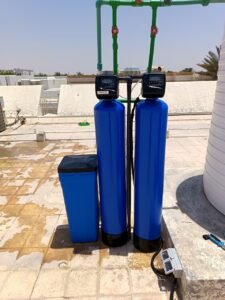
Home Water Filter Installation Guide & Prices in UAE
A complete guide to choosing and installing

Demand for well water desalination plants has grown sharply, and for good reason: access to clean drinking water is no longer a luxury but a genuine necessity that is directly tied to the continuity of life itself.
As global demand for fresh water climbs and water resources grow scarce across large parts of the world, particularly in desert environments, well water desalination plants have emerged as an advanced technical solution capable of turning saline or brackish water into a safe source for drinking and everyday use.
In the United Arab Emirates, where the climate is arid, temperatures are high and rainfall is scarce, this technology is a lifeline for farmers and local communities that rely heavily on groundwater. Yet that groundwater is often too salty to use and needs comprehensive treatment before it is fit for consumption.
In this article we will walk through exactly how well water desalination plants are installed, why the process matters, and how to measure water salinity accurately. We will also look at the main reasons water becomes salty in certain areas, and highlight the leading companies that specialise in installing well water desalination plants across the UAE.
Water salinity refers to the amount of dissolved salts a body of water contains. It is usually measured in parts per million (ppm) or by reading electrical conductivity (EC).
Several factors drive up the salinity of groundwater, the most important of which are:
Seawater intrusion:
In coastal areas in particular, seawater can seep into underground aquifers, pushing salinity levels significantly higher.
Intense evaporation:
In hot climates, and especially in the United Arab Emirates, high temperatures cause water to evaporate, which concentrates the salts left behind in the soil and remaining water.
Geological dissolution:
As water travels through layers of rock and salt-bearing minerals, those salts dissolve into it and raise its salinity.
Human pollution:
The overuse of chemical fertilisers and the discharge of industrial waste noticeably increase salinity as well.
All of these factors make it more urgent than ever to install well water desalination plants, both to solve the problem and to protect our water resources in their pure, fresh state.
Salinity is measured against international standards: water with a salt content above 1,000 parts per million is considered unsuitable for drinking, which explains why well water desalination plants have become so widespread in arid regions.
The main methods used to measure water salinity before installing a well water desalination plant are as follows:
This device measures total dissolved solids in water in ppm, and it could not be simpler to use. You place the probe in the water, wait a few minutes for the reading to appear, and the higher the value on the screen, the higher the salinity.
Here electrical conductivity is measured (in µS/cm or mS/cm), and it can be converted into an approximate salinity figure by multiplying the value by 0.64.
With this instrument, salinity is read by placing a drop of water on the glass, closing the cover, waiting a moment and then looking through the lens to read the salinity in ppt.
This is one of the most precise ways to measure the salinity of well water, as it identifies every type of salt present in the sample.
It is worth noting that readings above 2,000 ppm are generally unsuitable for drinking, though the water may still be viable for agriculture depending on the crop.
As for the cost, TDS and EC meters are relatively small, inexpensive and easy to use, with market prices in the region of USD 20 to 50.
Measuring the salinity of the well water accurately before installing a well water desalination plant is essential, as it tells you which type of plant is best suited, narrows down your options and helps you achieve the best possible results.
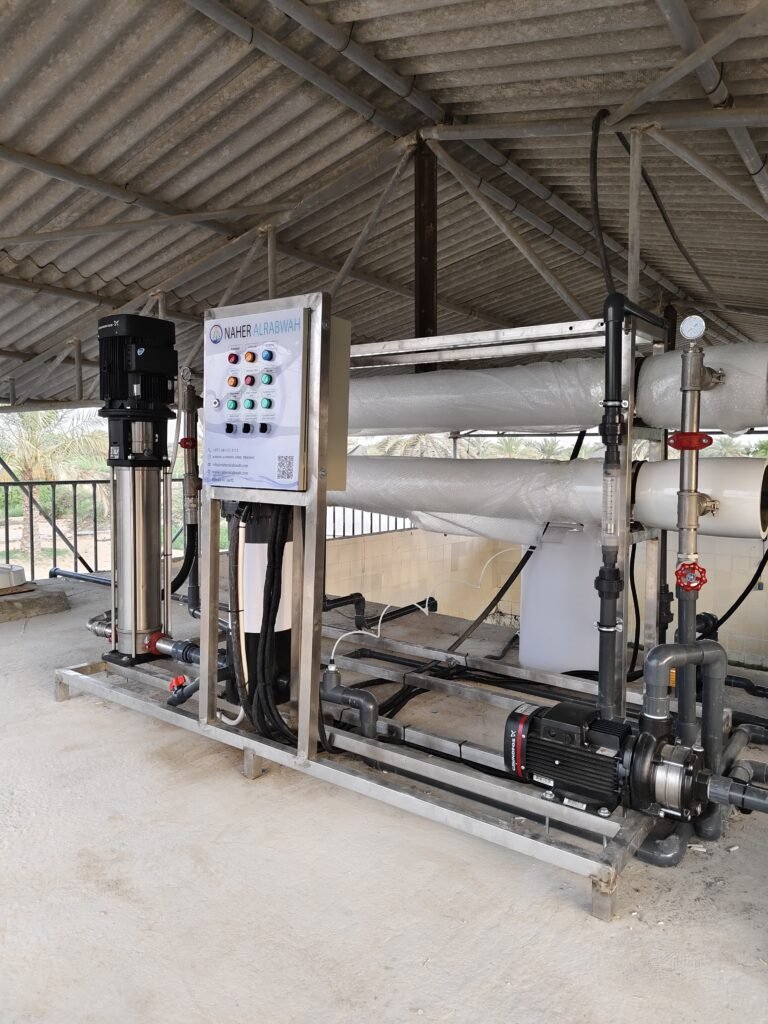
In the past, striking a salty well meant abandoning it and searching for another site, which wasted both time and resources.
Today the equation has changed thanks to desalination technologies that make it possible to turn unusable water into a sustainable source for drinking and farming. For more details about desalination plants for salty well water, click here.
The benefits of installing a well water desalination plant are numerous, and the most important of them are:
Providing safe drinking water even in areas far from surface water sources.
Saving agriculture by reducing the salinity that damages plant roots and weakens productivity.
Reducing illnesses linked to water contaminated with salts or heavy metals.
Achieving water sustainability rather than depending solely on rainfall or imported water.
In essence, desalination works on the principle of removing dissolved salts and minerals until their concentration is low enough to make the water suitable for drinking, irrigation or any other use.
The most prominent technologies in use are:
Membrane technologies:
Such as reverse osmosis and nanofiltration, which rely on semi-permeable membranes that block salt molecules from passing through.
Thermal technologies:
Chief among these is multi-stage distillation, which works by evaporating the water and then condensing the vapour to separate out the salts and obtain completely pure water.
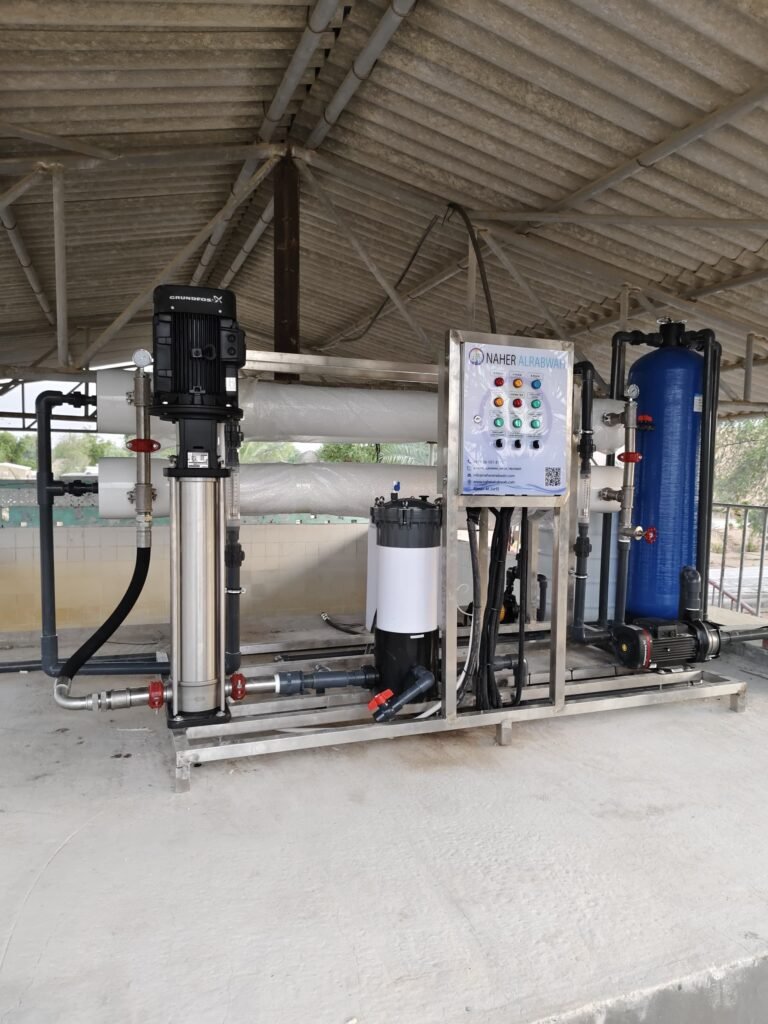
There are a great many techniques used in the desalination of well water, and the way a well water desalination plant is installed differs radically depending on which one is chosen. The most important desalination methods are the following:
Reverse osmosis:
Here the saline water is forced through special membranes under high pressure, so that only pure water molecules pass through while larger particles such as contaminants and salts are separated out. This method delivers very high water quality, but it requires regular maintenance and consumes more electrical energy than the alternatives.
Nanofiltration:
This technology helps remove divalent salts such as calcium and magnesium. It is an ideal choice for agriculture, or as a pre-treatment stage ahead of reverse osmosis, and it works beautifully within well water desalination plant installations.
Thermal distillation:
This is extremely effective when dealing with very high salinity water, but its drawback is that it consumes a great deal of energy, which makes it suitable only for large-scale projects.
Electrochemical desalination:
This relies on separating ions through ion-exchange membranes using an electric current. It is lower in energy cost but is not suited to water with very high salinity.
The practical steps for installing a well water desalination plant:
In reality, installing a well water desalination plant begins with a thorough study and ends with handing over a system that is ready to operate. The process includes the following stages:
Before anything else, we need to take samples of the well water and carry out laboratory tests to determine its salinity, turbidity and the type of contaminants present.
Next we work out the required production capacity in litres or cubic metres per day.
After that, the most suitable technology must be selected based on the characteristics of the water and the intended use, in order to move ahead with installing the well water desalination plant.
The most important step in installing a well water desalination plant is drawing up precise plans for the location of the equipment, the pipelines and the filtration units. It is best to review this with specialists from a company that focuses on water desalination and treatment, such as Naher Al Rabwah for Water Equipment and Technology Trading in Ajman, Al Jurf 2, which can be reached on +971 56 151 3111.
The next step is to determine the power requirements (electricity or solar energy) and put them in place.
Finally, corrosion-resistant materials must be chosen, especially in cases of high salinity. For more details about the prices of well water desalination plants in the UAE for 2025, click here.
At this stage we need to build a concrete base or a metal platform to carry the equipment. In addition, the site must be protected from weather conditions such as direct sunlight or rain, and drainage lines for the reject water need to be prepared.
The most important components that must be in place for installing a well water desalination plant are:
Submersible pumps: these are lowered directly into the well and connected to the main delivery line.
Pre-treatment systems: these are filters that remove sand and large particles, and it is best to choose American manual or automatic filters, which are available at Naher Al Rabwah.
Secondary treatment systems: these consist of carbon and sand filters, along with anti-scaling chemical treatments.
The desalination unit: fitting reverse osmosis membranes or distillation units depending on the design, the type of plant and how much capacity we need for the well water desalination plant.
Storage tanks: one tank for the treated water and another to collect the brine that must be discharged elsewhere.
In this step, all the units must be linked to an electronic control panel that monitors performance and adjusts pressure and flow. It is important that this panel is built to a high quality standard. Sensors must also be installed to continuously measure salinity and pH, ensuring the system runs accurately and with high efficiency.
Trial operation:
Do not let the technician installing the well water desalination plant leave before the system has been run for a set period while the results are monitored, so that the settings can be fine-tuned to reach peak performance.
Training and Handover
Operators must be trained in safe operating procedures and routine maintenance. After that, the operating manuals and technical drawings should be handed over, and a quality guarantee on the products should be requested.
Once the well water desalination plant is installed, the daily operating cycle begins, covering pumping, filtration, desalination, final treatment and distribution. As for maintenance, it must be carried out regularly on the membranes and filters to guarantee long-term performance. For more details about water desalination plants in the UAE, click here.
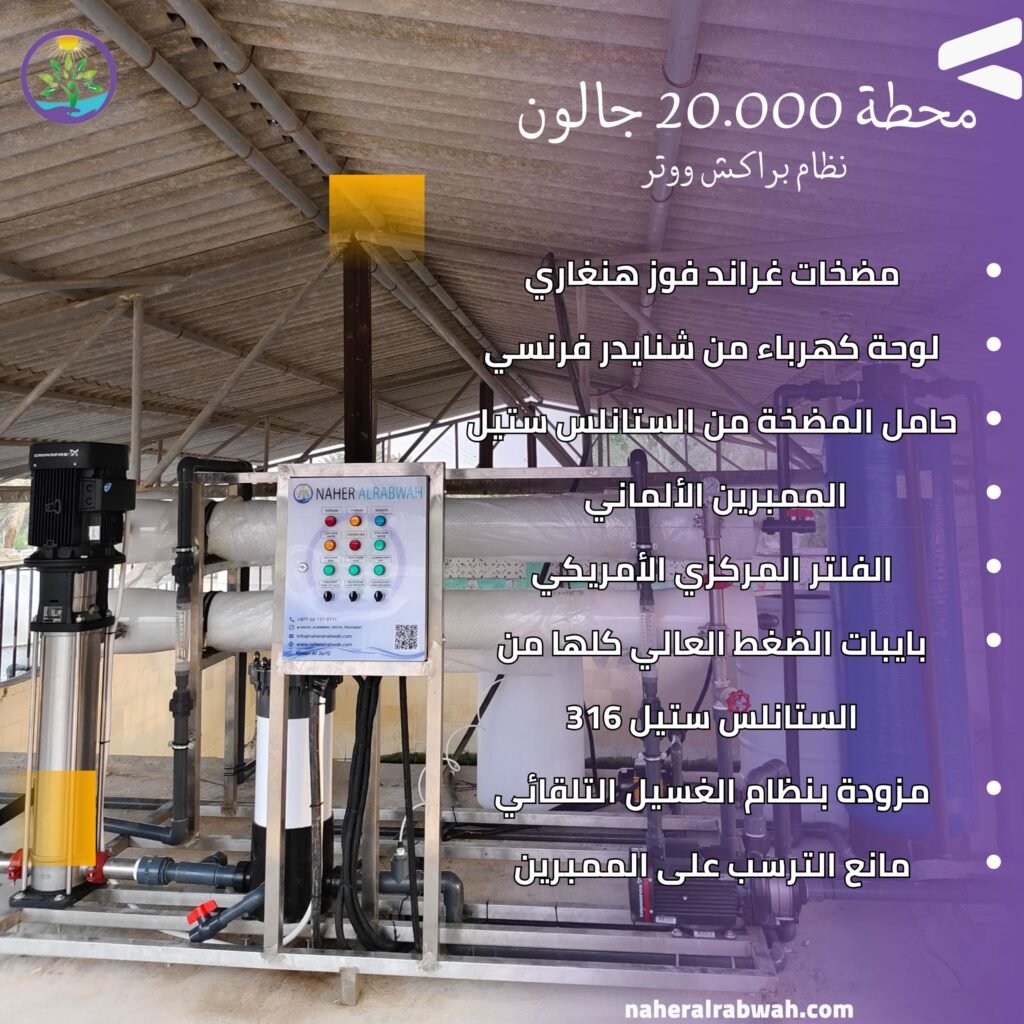
There is no doubt that the road to running a well water desalination plant at one hundred percent success is full of obstacles, especially when we are talking about a dry, intensely hot desert country. The most significant challenges standing in the way of a fully successful well water desalination plant installation, together with the solution to each, are:
Membrane fouling: this is one of the biggest challenges, since membranes can become clogged by salts and contaminants. The problem can be limited, however, through good pre-treatment and by paying closer attention to membrane build quality.
Energy cost: one of the most prominent challenges, and a real barrier that prevents many people from being able to afford and install a well water desalination plant, is the high cost of energy consumption. That is why it is important to reduce it by using solar power.
Disposing of the reject water: once the fresh water has been separated from the salts and impurities, the murky, salty brine that remains is difficult to get rid of. It therefore needs to be treated or reused for purposes other than drinking.
Shortage of technical staff: a shortage of skilled labour is a major challenge across every field in the United Arab Emirates, and in the field of installing well water desalination plants it is genuinely difficult to find true experts. For that reason, as many operators as possible should be trained on an ongoing basis.
Environmental impact: poorly planned desalination can raise the salinity of groundwater or harm marine ecosystems when brine is discharged, so safe disposal methods and environmental treatment must be adhered to.
The cost of desalination plants: the cost of a plant is affected by its production volume, the type of technology and the technical specifications. Prices in the UAE can range from a few thousand to millions of dirhams for large projects, with considerable variation in warranty and maintenance services between companies. It is important to establish clear pricing so that the customer is fully aware of the costs involved.
In conclusion, installing salty well water desalination plants is an investment in water security, not merely a technical option.
With all the recent advances in renewable energy and desalination, it is now possible to produce high-quality water from any source, however salty, and at a reasonable running cost.
In truth, the water future of arid regions depends to a large extent on the spread of these solutions and their continued development. One of the foremost companies constantly striving to innovate practical methods for developing and improving the performance of desalination plants is Naher Al Rabwah for Water Equipment and Technology Trading in Ajman, Al Jurf 2 (+971 56 151 3111),
Much of the credit goes to the company’s team, with their broad experience and their deep, valuable knowledge in the field of water treatment and quality improvement. So if you are looking for a trusted partner for installing a well water desalination plant in the UAE, you will find no one better than Naher Al Rabwah to be your primary go-to provider.
Finally, after this in-depth explanation of how well water desalination plants are installed, the challenges facing their development, the treatment methods available and a simple guide to measuring well water salinity, we can only advise you to protect this vital lifeline, to make the most of every drop of water, and to overcome every obstacle standing between you and pure, high-quality, sustainable water.
A complete guide to choosing and installing
A complete guide to the Japanese water
A practical 2026 guide to choosing the
A practical guide to water filter systems
 Call Us - اتصل بنا